LED lighting has been a popular topic for years—and for good reason. Unless you have a lifetime supply of old incandescent bulbs stored in your garage, switching to LEDs is simply the new standard. Fortunately, understanding how to choose the right LED bulb is easier than you may think, and it plays a major role in both how your home feels and how your paint colors appear.
Before we talk about choosing bulbs, let’s simplify a few key concepts.
What Does LED Really Mean?
LED stands for Light Emitting Diode, but don’t worry — everyone simply calls them LEDs. What matters more than the technical term is how the bulb performs and how the color of its light affects your space, your mood, and even your sleep.
Because this is a blog about color, let’s start with the two types of light that influence your circadian rhythm the most:
- Blue (cool) light
- Yellow (warm) light
Blue Light vs. Yellow Light: Why It Matters
Blue Light
LED bulbs that emit cooler, bluer light waves stimulate the release of serotonin — the hormone responsible for alertness, focus, learning, and energy.
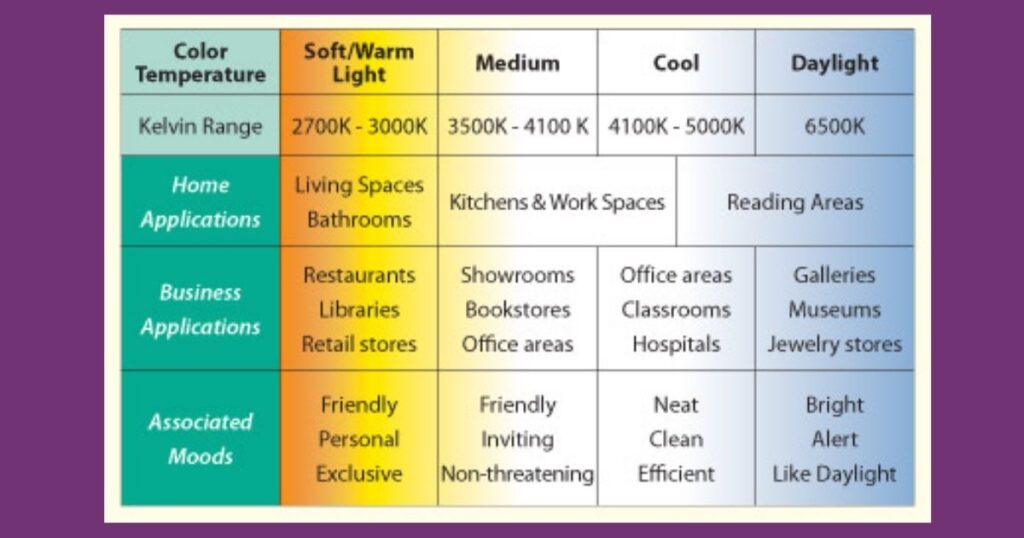
This mimics natural daylight, which is why cooler bulbs are ideal for:
- Kitchens
- Home offices
- Bathrooms
- Craft or hobby rooms
- Any area requiring clear task lighting
Keep in mind: cool light will change how your paint colors read, but we’ll cover metamerism in a separate post.
Yellow Light
Warm, yellow-toned bulbs support the production of melatonin, the hormone that signals your body to relax and prepare for sleep.
These bulbs are best used in:
- Bedrooms
- Living rooms
- Dining rooms
Today, many LED bulbs are fully dimmable, allowing you to create a softer, cozier atmosphere when needed—something that wasn’t possible with older bulb technologies.
Understanding Kelvins (K): The Color of Light
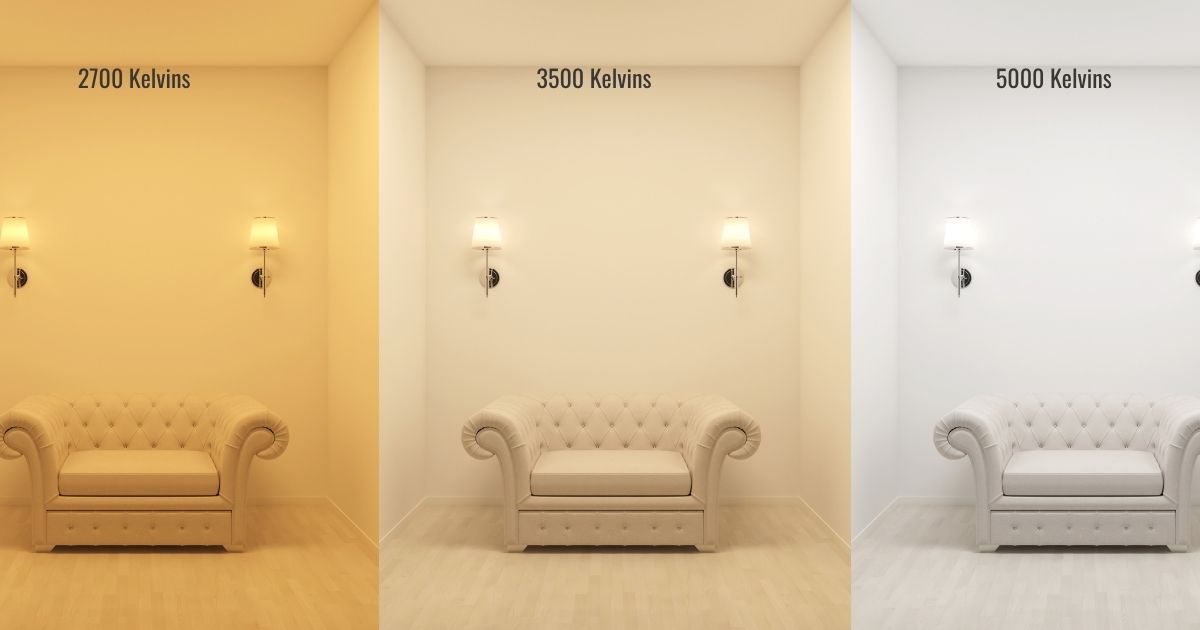
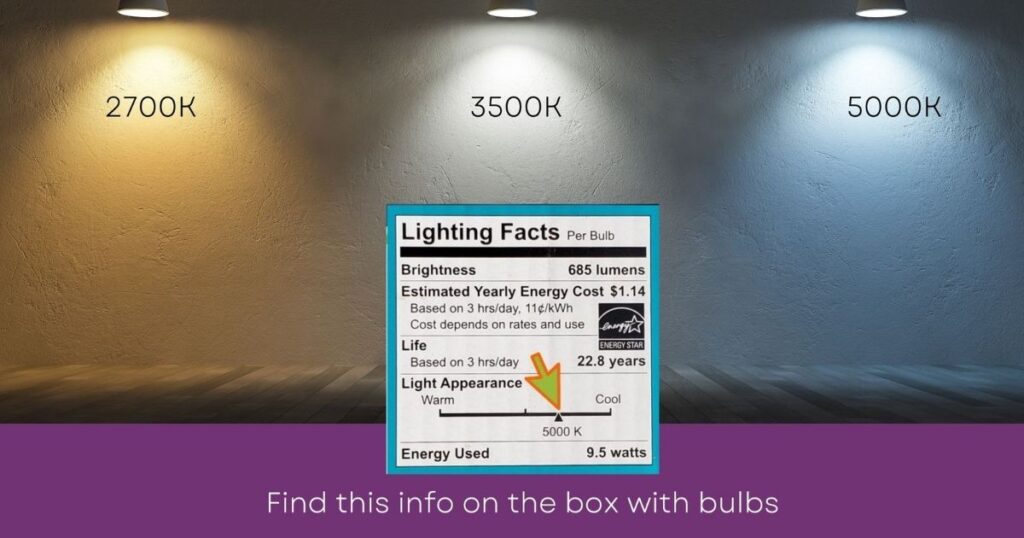
When choosing a bulb, look for the Kelvin (K) rating on the packaging. This number tells you the color temperature of the light:
- 2700K → warm, soft light (yellow/orange)
- 3000K → warm white
- 4000K → neutral white
- 5000K–6000K → cool daylight (blue-toned)
Lower Kelvins = warmer light
Higher Kelvins = cooler, bluer light
Warm light has remained the most popular for residential spaces because it feels natural, comforting, and flattering.
Understanding Lumens: The Brightness of the Bulb
Years ago, we judged brightness by watts, but watts measure energy use—not light output. LEDs use far less energy, so wattage is no longer a useful comparison.
Lumens (lm) measure brightness.
- More lumens = brighter light
- Fewer lumens = softer light
Most packaging lists lumens clearly, making it much easier to choose the correct brightness for each room.
Other Advantages of Modern LED Bulbs
Today’s LED bulbs have come a long way. Many homeowners are pleasantly surprised to learn that:
- LEDs now turn on instantly—no more slow warm-up time.
- They do not look harsh or sterile like older CFL “pigtail” bulbs.
- Many bulbs now advertise “high color accuracy” which means they show colors more naturally and help you see the true undertones in your paint.
- LEDs come in a wide range of shapes, sizes, and styles, making them suitable for nearly any fixture.
And let’s not forget one of the biggest benefits:
LEDs can lower your energy usage by up to 80% compared to incandescent bulbs. That’s significant savings over the life of your home.
How to Shop for LED Bulbs: A quick checklist before purchasing, check the packaging for:
- Kelvins (K): What color temperature do you want?
- Lumens (lm): How bright should the space be?
- CRI (Color Rendering Index): Higher CRI = better color accuracy
- Dimmable or non-dimmable: Choose based on your fixture
- Shape and size: Ensure it fits your lamp or overhead fixture
If you’re unsure, ask someone in the lighting aisle—now you know exactly what to ask for.
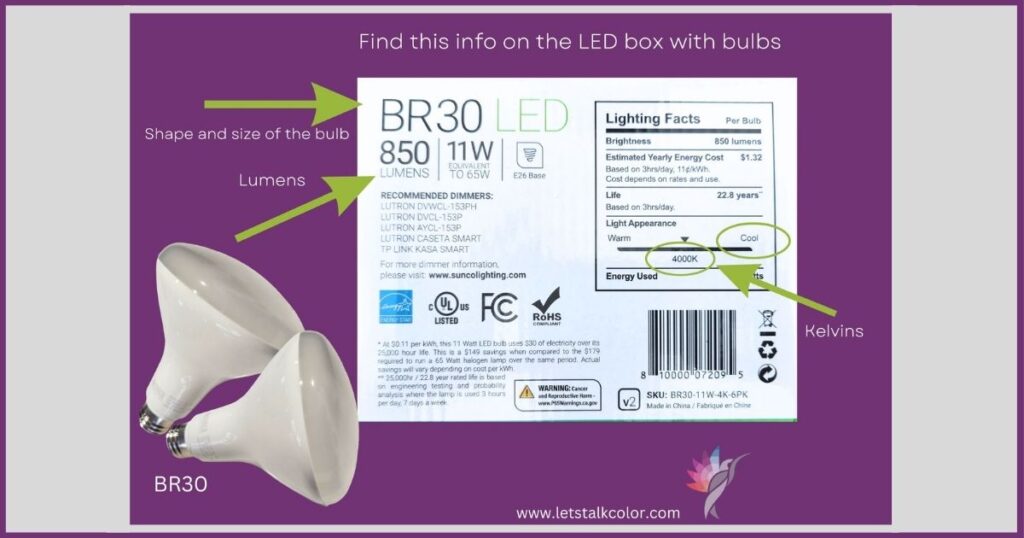
Lighting is one of the most powerful design tools in your home. The right LED bulb not only enhances your paint colors but also supports your mood, energy, comfort, and sleep patterns.
Ready to transform the way your home feels — morning to night?
Lighting is the one design decision that impacts every color in your home, as well as your mood, your energy, and even your sleep.
The Practical Guide to Effective Lighting for Your Home
will walk you step-by-step through smart lighting choices. Inside, you’ll learn exactly which bulbs to use in each room, what Kelvins truly mean, how to avoid color distortion, and how to create a healthy, circadian-rhythm–friendly home.
👉 Click here to purchase your Lighting Guide now.
Your home — and your well-being — will thank you!
Ready to take the next step?
You can book an appointment with me for personalized support or schedule a discovery call if you’d like to explore how I can help.
Enjoy this blog?