Primer is one of the most misunderstood parts of the painting process. Many homeowners assume it’s optional, unnecessary, or already included in the paint itself.
During my color consultations, I get asked this question a lot and I see the opposite play out far too often: Skipping primer is one of the fastest ways to compromise both color and longevity.
Understanding primer doesn’t require technical knowledge — just a clear sense of what role it plays in a successful paint project.
What Is Primer?
Primer is not paint.
Its job is not to add color or make a surface look finished. Primer exists to prepare the surface so the paint can do its job properly.
Think of primer as the bridge between the surface and the paint. It creates a stable, uniform foundation that allows paint to:
- Adhere correctly
- Dry evenly
- Show color accurately
- Last longer
Without that foundation, even high-quality paint can struggle.
What Is Primer Made Of?
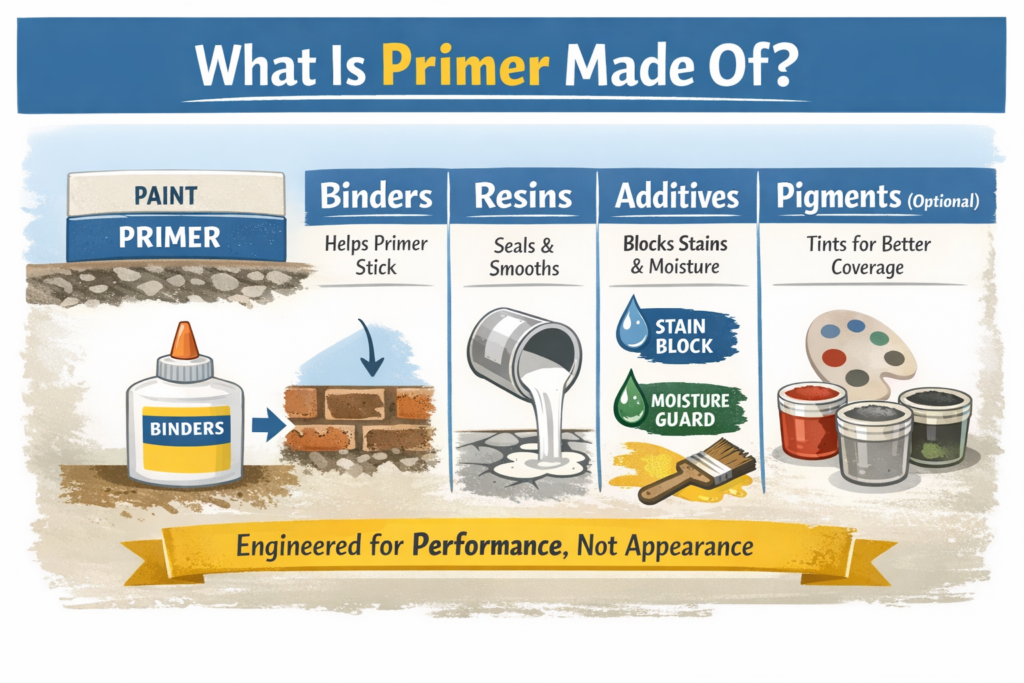
At a basic level, primer is made of:
- Binders that help it stick tightly to surfaces
- Resins that create a sealed, uniform layer
- Additives designed to block stains, improve adhesion, or prevent moisture issues
Primer formulas vary depending on what they are designed to do. Some focus on bonding to slick surfaces, while others seal porous materials or block stains from bleeding through.
Homeowners don’t need to know the chemistry — but it helps to understand that primer is engineered for performance, not appearance.
Why Paint Alone Isn’t Enough
Modern paints often claim to include “paint and primer in one.” While these products can work in certain situations, they are not a replacement for true priming when the surface requires it.
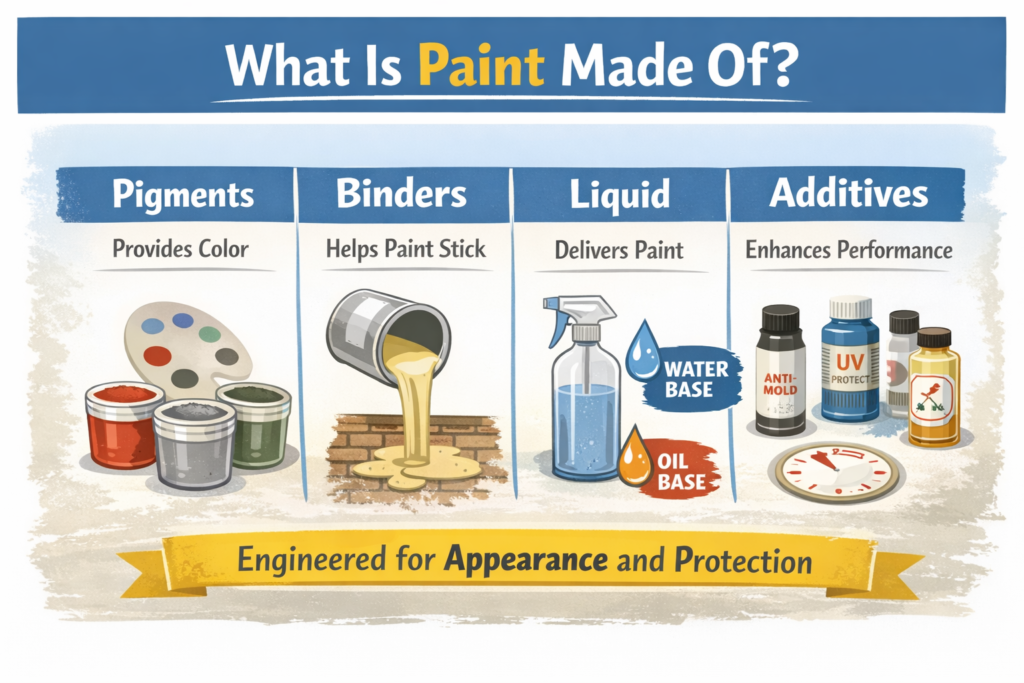
Paint is designed to:
- Add color
- Provide protection
- Create a finished look
Primer is designed to:
- Stabilize the surface
- Improve adhesion
- Create consistency
They serve different purposes, and one does not automatically replace the other.
When Primer Is Absolutely Necessary
Primer truly matters when the surface needs help — and that happens more often than most homeowners realize.
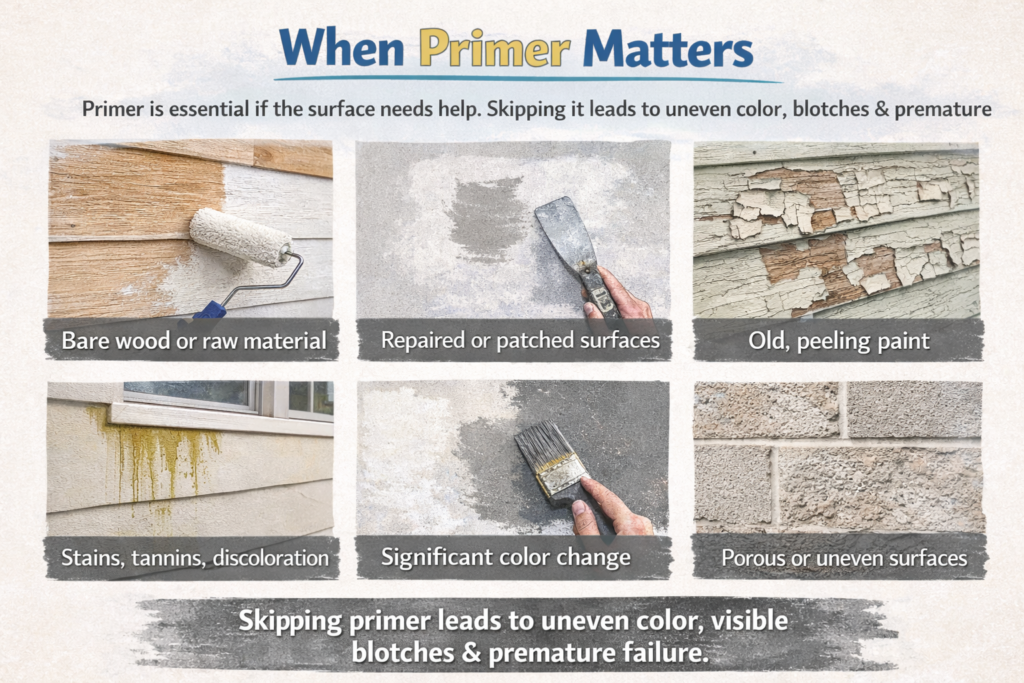
Primer should be used when:
- Bare wood or raw material is exposed
- Surfaces have been repaired or patched
- Old paint is peeling or failing
- Stains, tannins, or discoloration are present
- You’re making a significant color change
- The surface is porous or uneven
In these situations, skipping primer often leads to uneven color, visible blotches, or premature paint failure.
How Primer Affects Color Outcomes
From a color perspective, primer plays a major role in how paint looks once it’s applied.
Primer helps:
- Create a uniform base so color appears even
- Prevent previous colors from influencing the new one
- Support true color depth and consistency
Without primer, darker patches, repairs, or previous colors can subtly alter how your new color reads — especially in exterior light.
Tinted Primer: When It Makes Sense
In some cases, primer can be tinted to support the final color.
Tinted primer can help:
- Improve coverage for deeper or more saturated colors
- Reduce the number of finish coats needed
- Create a smoother, more even color transition
This is not always necessary, but it can be beneficial for bold or darker exterior colors.
Primer Is Surface-Specific
Not all primers are the same.
Different surfaces require different types of primer:
- Wood behaves differently than masonry
- Metal requires specific bonding properties
- Previously painted surfaces need different preparation than raw materials
A quality paint project matches the primer to the surface — not just the color.
What Homeowners Should Ask About Primer
You don’t need to dictate how a painter does their job, but it’s reasonable to ask:
- Where will primer be used?
- What type of primer is appropriate for these surfaces?
- Will primer be tinted if needed?
- How does primer support the longevity of the paint?
Clear answers indicate a thoughtful, professional approach.
The Takeaway
Primer is not an optional extra — it’s a performance layer.
When primer is used correctly:
- Paint adheres better
- Color looks more consistent
- The finish lasts longer
- Fading, peeling, and blotchiness are reduced
From a color consultant’s perspective, primer is one of the quiet steps that makes everything else work better.
Paint is what you see. Primer is what makes it last.
When preparation and primer are handled properly, color performs as intended — and that’s when an exterior paint project truly succeeds.
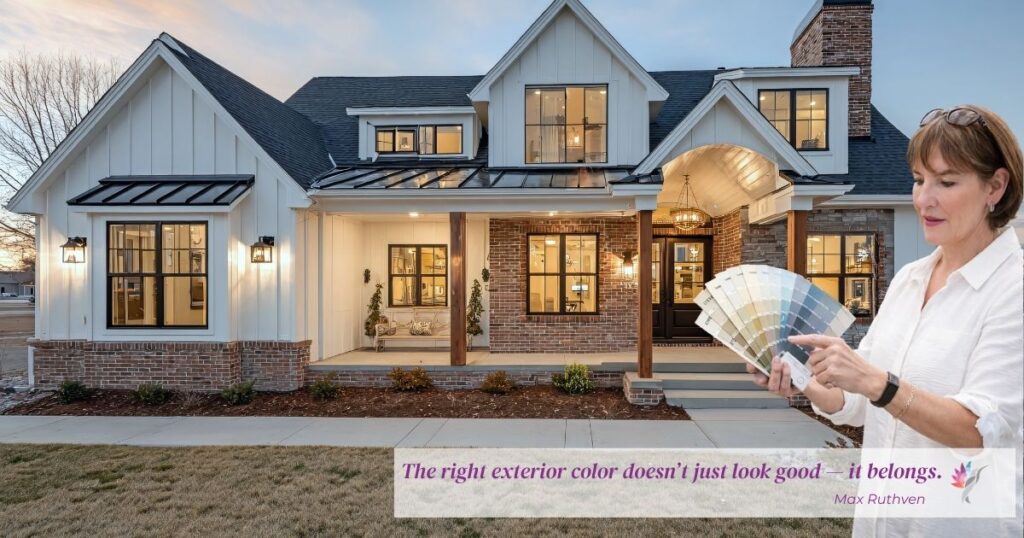
Choosing the right color is important — but making sure that color performs on your home’s unique surfaces is just as critical. That’s a key part of what we cover during an exterior color consultation, so your final result isn’t just pretty… it’s built to last. Book your Exterior Color Consultation right here and save money form the word go!
Master the Art of Exterior Design 🏠
Choosing exterior colors shouldn’t be a guessing game. Invest in a proven system with our eBook, “S.M.A.R.T – Method for Exterior Color Harmony.” For $29, you’ll gain the professional framework needed to create a balanced, cohesive, and beautiful home exterior that lasts.
Get your copy of S.M.A.R.T Method Guide here!

Ready to take the next step?
You can book an appointment with me for personalized support or schedule a discovery call if you’d like to explore how I can help.
Enjoy this blog?