Have you ever looked around your home and thought, “Why doesn’t this feel quite right — even though I like all the individual pieces?”
You’re not alone.
One of the biggest misconceptions in interior design is the idea that you’re supposed to fit neatly into a single design category: Modern. Traditional. Farmhouse. Minimalist.
In real life, that rarely happens.
Most homeowners are living with a mix of:
- Things they inherited
- Pieces they bought years ago
- Architectural features they can’t change
- Styles they admire now — but didn’t back then
This is where confusion sets in. Not because you’re bad at design — but because no one ever explained how design styles actually work in real homes.
The Truth: Most Homes Are a Blend of Design Styles
Here’s what I see again and again in consultations:
People don’t have one design style. They have:
- A dominant style (the foundation)
- One or two supporting styles (the influence)
For example:
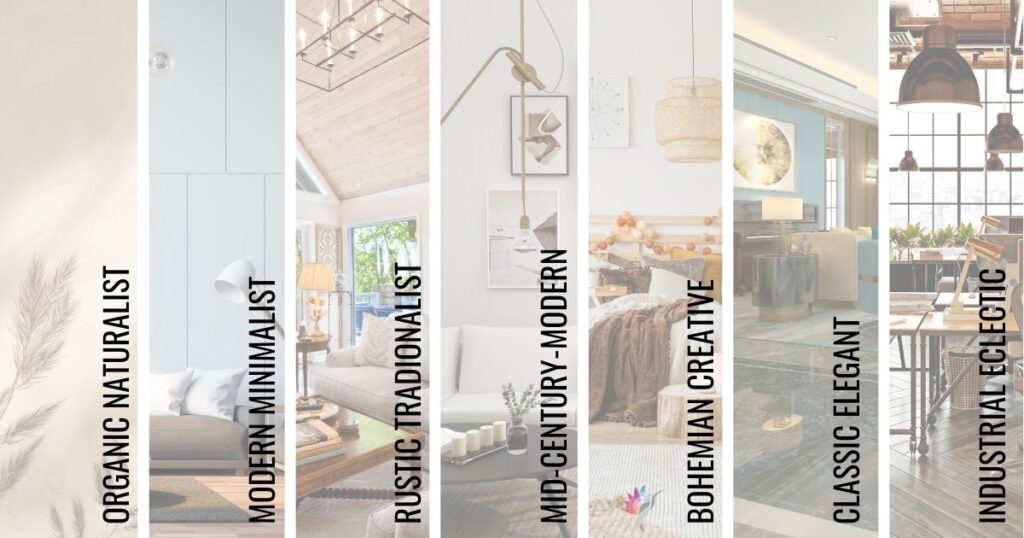
- A Classic Elegant home with Organic Naturalist warmth
- A Modern Minimalist space softened by Scandinavian elements
- A Rustic Traditional home craving cleaner, more updated lines
When homeowners try to decorate without understanding this blend, they often:
- Buy pieces that don’t work together
- Choose paint colors that fight the architecture
- Chase trends that don’t feel authentic
- Constantly second-guess their decisions
The result? A home that feels visually busy, emotionally disconnected, or unfinished.
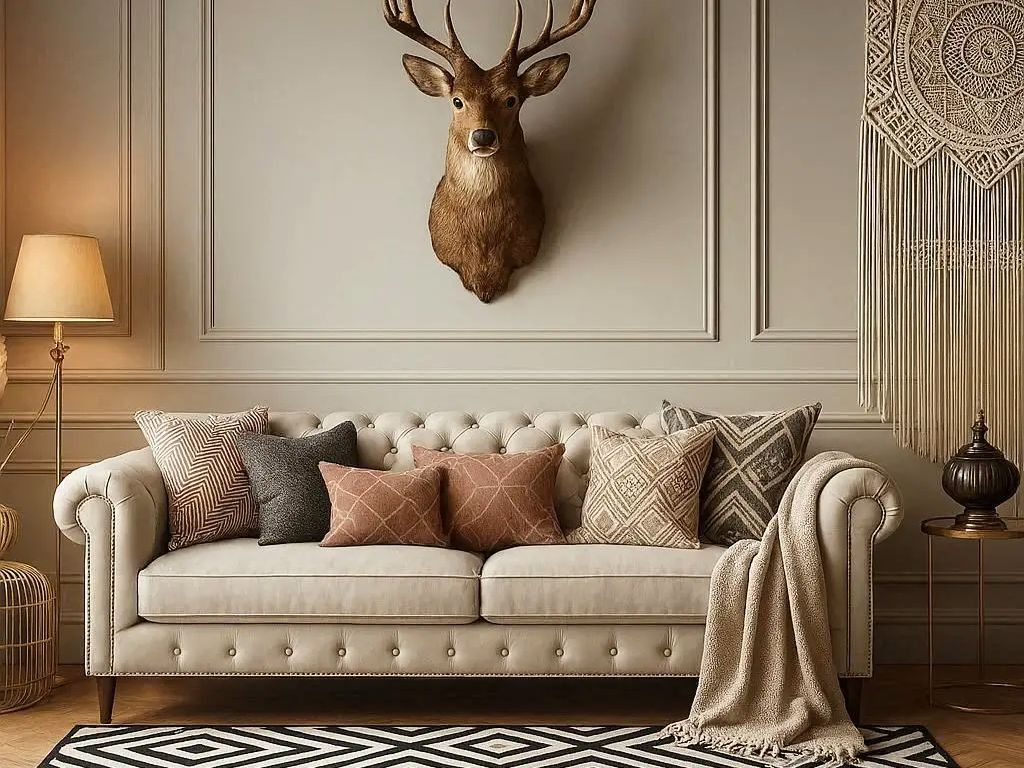
Classic Elegant meets Boho, modern geometric rug and awkward out-of-place hunter’s decor. Confusing!
Why Identifying Your Dominant Design Style Changes Everything
Once you understand your dominant design style, something powerful happens:
- Color choices become clearer
- Furniture decisions feel intentional
- You stop impulse-buying décor that doesn’t belong
- Your home starts to feel cohesive — not chaotic
Design clarity isn’t about rules.
It’s about alignment.
Your dominant style sets the framework.
Your supporting styles add personality.
Without that framework, even beautiful colors and furnishings can feel “off.”
Design Style Isn’t Just About Looks — It’s About How You Live
Design styles aren’t just visual categories.
They reflect:
- How much structure or softness you need
- Whether you crave calm or energy
- How you move through your space daily
- What makes you feel grounded, inspired, or at ease
That’s why copying a Pinterest image rarely works long-term.
It wasn’t designed around YOU!
Your home should support your lifestyle, your emotional needs, your stage of life and your future direction — not your past habits
Why Color Feels So Hard Without Style Clarity
Color confusion almost always traces back to one issue:
People choose color before understanding style.
When you don’t know your design foundation:
- Neutrals feel risky
- Accent colors feel overwhelming
- Whites all start to look wrong
- Nothing seems to flow from room to room
Once style is defined, color becomes a tool — not a guessing game.
That’s Exactly Why I Created the Design & Color Style Quiz
I kept seeing homeowners struggle with the same questions:
- “Why do I love multiple styles?”
- “Why do trends never quite work in my home?”
- “Why does my space feel disconnected?”
This quiz helps you:
- Identify your dominant design style
- Understand your supporting styles
- Learn the key characteristics that guide your decisions
- Download a curated color palette aligned with your results
It’s not about boxing you into a trend. It’s about giving you language, clarity, and direction.
Your Home Isn’t Confused — It’s Just Untranslated
Most people don’t need more inspiration. They need interpretation. Once you understand your design and color style, decisions feel lighter, faster, and far more confident — whether you’re repainting one room or planning a full renovation.
Ready to Discover Your True Color & Design Style?
If you’ve ever felt torn between styles, stuck with past choices, or unsure how to move forward — this is your starting point.
👉 Identify your True Color & Design Style – Hint: This is not your usual quiz!
Ready to take the next step?
You can book an appointment with me for personalized support or schedule a discovery call if you’d like to explore how I can help.
Enjoy this blog?