Paint color often gets all the attention, but what’s in the paint matters just as much as how it looks on the wall. More homeowners are hearing terms like low-VOC and zero-VOC and assuming those labels automatically mean “safe” or “better.” The reality is a bit more nuanced.
Understanding what these terms actually mean — and what to look for — can help you make smarter decisions for your home, your health, and your long-term comfort.
What Are VOCs in Paint?
VOC’s, or Volatile Organic Compounds, are chemicals that evaporate into the air as paint dries and cures. These compounds are responsible for that strong “paint smell” and can continue releasing into the air for days or even weeks after a project is complete.
High VOC levels can contribute to headaches, eye and throat irritation, dizziness, and respiratory discomfort. Over time, VOCs also impact indoor air quality, which matters most in spaces where people spend a lot of time — bedrooms, living rooms, nurseries, and home offices.
Traditional paints tend to contain higher VOC levels, while newer formulations are designed to significantly reduce those emissions.
Low-VOC vs. Zero-VOC: What’s the Difference?
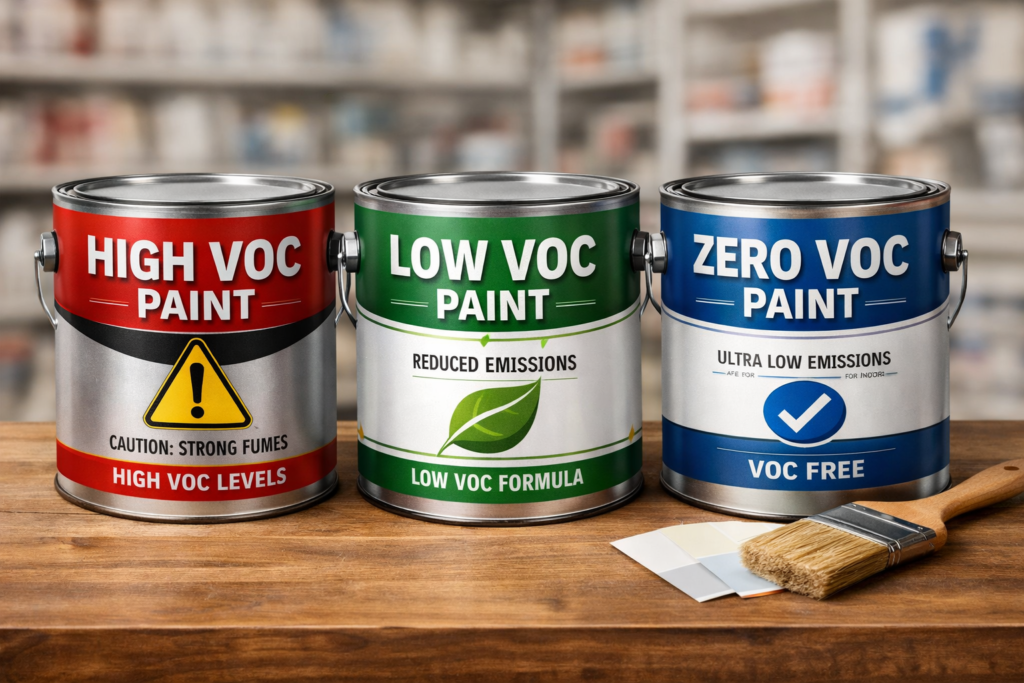
The terms low-VOC and zero-VOC aren’t marketing buzzwords — they’re based on measurable thresholds.
- Low-VOC paint contains a reduced amount of VOCs compared to traditional paint.
- Zero-VOC paint contains extremely small amounts, often close to zero, but not always completely free of chemical emissions.
Here’s the important part: zero-VOC doesn’t mean zero chemicals. Paint still needs binders, resins, and additives to perform properly. In addition, some colorants used for tinting can add VOC’s back into the paint, even if the base product is labeled zero-VOC.
This is why reading labels — and asking questions — matters.
Why Homeowners Are Choosing Low-VOC Paints
One of the biggest benefits of low-VOC and zero-VOC paints is improved indoor comfort.
These paints typically produce far less odor during and after application, making it easier to remain in the home during a project. They’re often preferred for households with children, pets, allergy sufferers, or anyone sensitive to strong smells.
Another advantage is faster room usability. With fewer emissions, spaces can usually be occupied sooner without lingering fumes.
Using Low-VOC Paint on the Exterior
Low-VOC paint can be used outdoors, but this is where extra care is needed.
Exterior surfaces are exposed to sun, moisture, temperature swings, and wear. Not all low-VOC or zero-VOC paints are engineered to handle extreme outdoor conditions equally well.
When considering low-VOC paint for exterior projects, look for products specifically rated for outdoor use and designed to resist fading, chalking, and moisture intrusion. A compatible primer is especially important to ensure long-term performance.
In certain climates or high-exposure areas, some traditional high-performance exterior paints may still outperform eco-focused options. This is a decision that should balance environmental goals with durability and maintenance expectations.

What to Look for When Choosing Low-VOC Paint
Not all low-VOC paints are created equal. Here’s what homeowners should pay attention to:
Read the Actual VOC Numbers
Look beyond the label and check the VOC content listed on the can. “Eco-friendly” doesn’t always mean low emissions.
Ask About Tinting
If you’re choosing a colored paint, confirm whether the tinting system adds VOCs. Some paints are zero-VOC only in their untinted base.
Match Paint to the Space
Bathrooms, kitchens, and exteriors require paints formulated for moisture and durability. A low-VOC option should still meet those performance needs.
Don’t Ignore Ventilation (Interiors)
Even low-VOC paint benefits from good airflow during and after application. Ventilation helps reduce any remaining odors and speeds curing.
The Bottom Line
Choosing paint isn’t just about color — it’s about how your home feels long after the project is done. Low-VOC and zero-VOC paints can significantly improve indoor comfort, reduce lingering odors, and support healthier air quality when used correctly.
The key is understanding what the labels actually mean and selecting products that align with both your lifestyle and the demands of the space. With the right information and thoughtful choices, you can create a home that looks beautiful and feels better to live in.
Paint for a healthier home.
Color is only half the story—how your paint performs for your health and your walls matters just as much. I’ve created a Homeowner Paint Selection Checklist to help you navigate VOCs, sheens, and durability with total clarity. Download your copy for free and ensure your next project supports a comfortable home.
Download the Free Paint Checklist here
Master the Art of Exterior Design
Choosing exterior colors shouldn’t be a guessing game. Invest in a proven system with our eBook, “S.M.A.R.T – Method for Exterior Color Harmony.” For $29, you’ll gain the professional framework needed to create a balanced, cohesive, and beautiful home exterior that lasts.
Get your copy of S.M.A.R.T Method Guide here!

Ready to take the next step?
You can book an appointment with me for personalized support or schedule a discovery call if you’d like to explore how I can help.
Enjoy this blog?
Follow me on Instagram and Facebook for more.