Curb appeal isn’t just about impressing buyers — it’s about how a home communicates from the very first glance. Whether a property is preparing for sale or simply being lived in, the exterior sets expectations long before anyone steps inside.
As winter fades — whether it lasted two days, two weeks, or two months — spring signals a reset. It’s the moment when exterior neglect becomes visible, and maintenance (or the lack of it) tells a story.
Curb appeal isn’t cosmetic fluff. It’s functional, emotional, and strategic.
Curb Appeal Is the First Conversation Your Home Has
Before layout, finishes, or color palettes are noticed, the exterior answers unspoken questions:
- Is this home cared for?
- Is it current or dated?
- Is it welcoming or overlooked?
That first impression happens instantly — and it influences everything that follows.
This is true whether:
- A buyer is scrolling online listings
- A guest is pulling into the driveway
- Or you’re arriving home at the end of the day
Why Curb Appeal Matters When Selling
When it comes to resale, curb appeal isn’t a nice-to-have — it’s the foundation everything else rests on. Long before a buyer steps through the front door, the exterior has already set expectations about value, care, and quality. It influences how forgiving buyers are once they’re inside, how they emotionally respond to the space, and even whether they decide to book a showing in the first place. A neglected exterior quietly suggests deferred maintenance, no matter how pristine the interiors may be.
Spring makes this even more important. Buyers naturally associate the season with freshness, growth, and new beginnings. When a home looks tired or overlooked on the outside, it immediately feels like work— regardless of how beautiful it may be once you’re inside.
Why Curb Appeal Matters When You’re Staying
Curb appeal isn’t only for the market — it affects daily life more than most people realize. The condition and presentation of a home’s exterior shape how it feels to arrive home each day, quietly influencing mood, comfort, and connection to the space. A well-maintained exterior reinforces pride in ownership and creates a sense of care that extends beyond appearances. It also plays a critical role in protecting materials from long-term damage, helping surfaces, finishes, and structural elements perform as intended over time. In this way, curb appeal supports a home’s long-term value, not just its short-term impression. Exterior upkeep is ultimately about stewardship, not vanity; homes that are cared for on the outside tend to age better on the inside as well.
Spring: The Exterior Reset Button
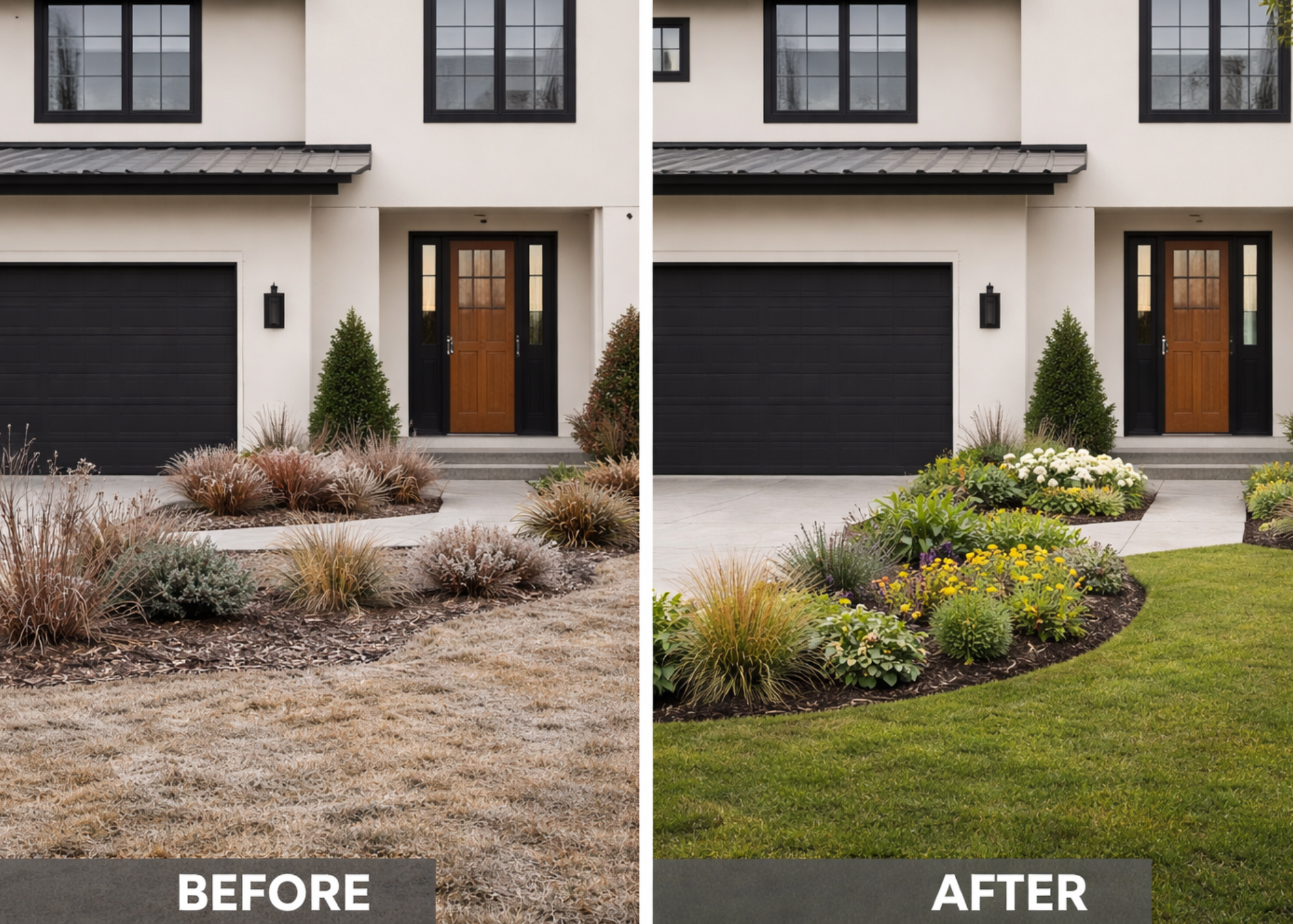
Spring acts as a natural reset button for a home’s exterior. Whether winter was harsh or relatively mild, it almost always leaves residue behind — dirt, salt, dead foliage and pollutants on surfaces, paint that looks faded or chalky, landscaping that appears stressed, and hardscapes or walkways that feel dull and neglected. As the season shifts, spring becomes the ideal moment to step back, reassess, and address what winter left behind. This doesn’t require expensive upgrades or dramatic changes; it’s about restoring clarity, making thoughtful adjustments, and approaching the exterior with intention.
High-Impact Exterior Improvements That Matter Everywhere
Regardless of climate or location, these elements consistently improve curb appeal:
- Cleaning siding, walkways, and hard surfaces
- Addressing peeling paint or worn finishes
- Refreshing the front door and hardware
- Editing landscaping rather than overplanting
- Ensuring lighting is functional and welcoming
Curb appeal works best when it feels calm, maintained, and deliberate—not decorative overload.
The Psychology Behind Exterior Impressions is rooted in trust.
People instinctively respond to what looks cared for, often before they can articulate why. A well-maintained exterior quietly communicates stability, reliability, pride, and longevity, sending clear signals about how a home has been treated over time. These cues influence perception across cultures and markets, making them universally understood regardless of location or style. This isn’t about following trends or chasing visual appeal—it’s about the subtle but powerful signals that shape confidence, expectation, and emotional response from the very first glance.
At its core, curb appeal is not about impressing strangers or keeping up appearances. It’s about how a home communicates, how it is perceived, and how it is experienced—whether that experience happens once during a showing or every single day by the people who live there. The exterior sets expectations, establishes trust, and quietly shapes emotional response long before anyone crosses the threshold.
Whether you are preparing to sell or simply continuing to live in your home, spring offers a natural opportunity to realign the exterior with the life happening inside it. After months of wear, weather, and neglect — however brief or prolonged—the outside deserves the same intention as the interior. Because no matter the market, location, or season, the exterior always speaks first.
Ready to turn “For Sale” into “Sold”?
Understanding the power of color is the first step, but applying it to your unique space is where the magic happens. My Home Staging Consultation provides up to 2 hours of onsite expertise followed by a detailed report tailored specifically to your home. I’ll help you highlight your home’s best features and create those “Emotional Connection Points” buyers can’t resist.
Check My Home Staging Consultation Here!
Want More Practical Staging Tips?
Make sure you read the following post as well to help you get your home ready for to sell
- Why Home Staging Matters — And How Color Makes the Difference
- Layered Neutrals: Adding Depth Without Clutter
- Color Flow in Staged Homes: Why seamless transitions makes a better impact
Ready to take the next step?
You can book an appointment with me for personalized support or schedule a discovery call if you’d like to explore how I can help.
Enjoy this blog?