Most people choose color by asking one question:
Do I like this color?
And honestly, that makes sense. Color feels personal. We are drawn to certain colors because they remind us of something, make us feel comfortable, or simply look beautiful on a paint strip, pillow, cabinet sample, or inspiration photo.
But liking a color is only the beginning.
The real question is:
What is this color supposed to do in the space?
Because once color enters a room, it is no longer just a preference. It starts affecting how the room feels, how your eye moves, what stands out, and whether the space feels calm, balanced, heavy, busy, flat, or complete.
That is where many color decisions go wrong.
Not because the color itself is bad.
But because it was chosen without a clear reason.
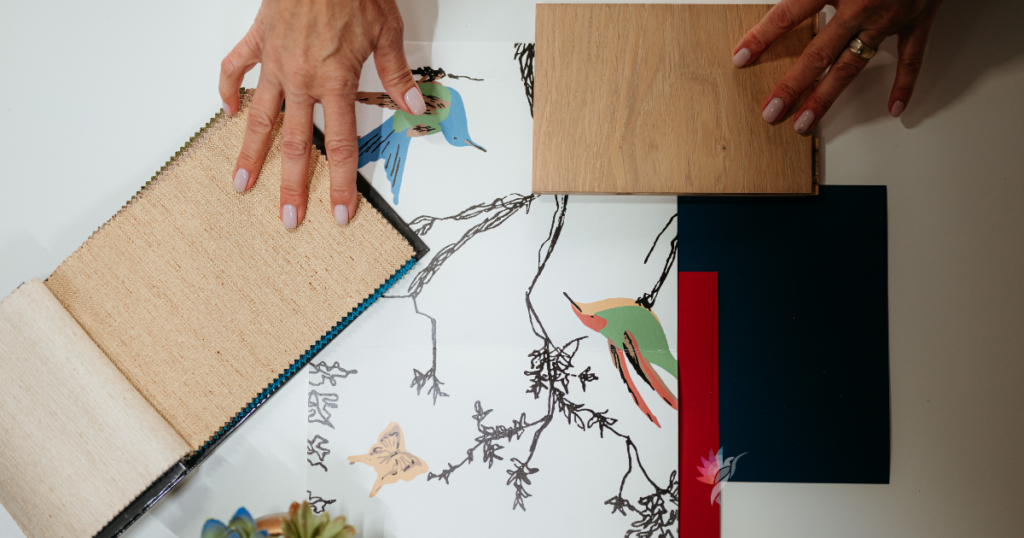
Color Tells the Eye What to Do
Whether we realize it or not, our eyes are always looking for order.
We want to know where to look first, where to pause, and how to move through a space. When color is placed with intention, it helps create that order.
It can draw attention to a fireplace.
It can quiet down a hallway.
It can connect one room to the next.
It can make a ceiling feel higher or lower.
It can make cabinetry feel built-in instead of added on.
It can help an open floor plan feel connected without making everything match.
But when color has no clear role, the eye starts working too hard.
That is when a room can feel unsettled, even if every individual piece is technically nice.
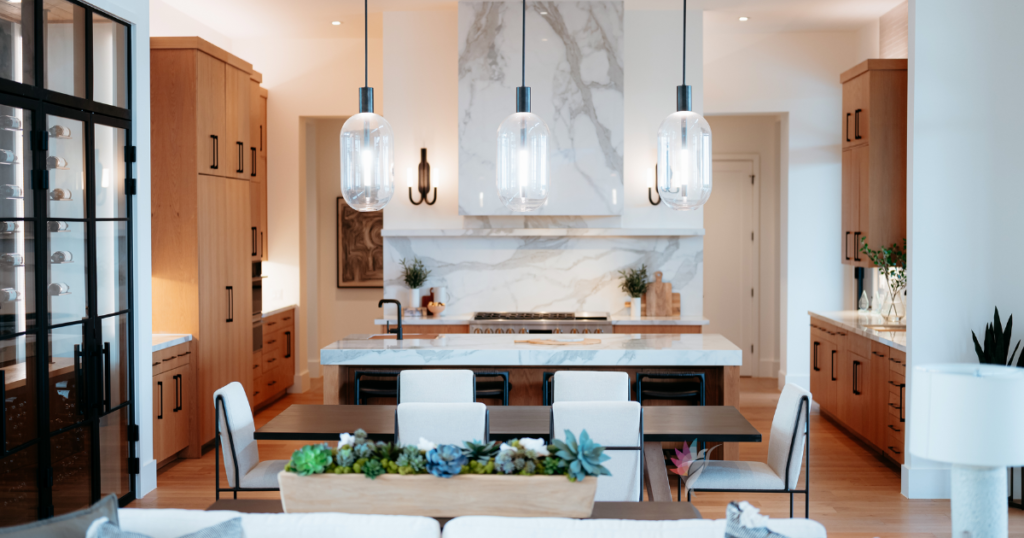
The Four Core Functions of Color
When you begin to use color as a system, four primary roles start to emerge:
1. Guiding Movement (Flow)
Color can lead the eye from one space to another.
Soft continuity creates ease.
Abrupt contrast can interrupt or redirect.
This is how color replaces structure—especially in open floor plans.
2. Creating Hierarchy (What Matters Most)
Not everything in a space should have equal visual weight.
Color helps establish importance—where the eye goes first, where it pauses, and what it remembers.
Without hierarchy, everything competes—and the space feels unsettled.
3. Defining Emotional Tone
Color doesn’t just influence how a space feels—it establishes its baseline.
Before furniture, styling, or even layout fully register, color sets the emotional direction of the room. It determines whether a space feels grounded or elevated, quiet or active, open or contained.
This is less about intensity and more about alignment.
When the emotional tone of the color system supports the purpose of the space, everything else begins to make sense.
When it doesn’t, the space can feel subtly unsettled—no matter how well-designed it appears.

4. Controlling Perception of Space (Scale & Proportion)
Color influences how large or small a space feels.
Lighter values can expand.
Darker tones can compress.
Tonal variation can shift proportions subtly—but powerfully.
This is where color becomes architectural.
Why Most Spaces Feel Unresolved
When color is applied without a defined role, the breakdown isn’t always obvious—but it’s always felt.
The space may appear cohesive at first glance, yet it lacks direction.
The eye doesn’t know where to land, how to move, or what to prioritize.
This is where subtle tension begins to build.
Not because the colors are wrong—but because they aren’t working together toward a clear outcome.
Without function, color becomes scattered rather than structured.
And even well-designed elements can feel disconnected as a result.
That’s when a space starts to feel incomplete—
not due to what’s missing, but because nothing is truly leading.
The Shift: From Choosing Color to Assigning Function
Once you understand that color has a role, the process changes.
You stop asking:
“What color should I use?”
And start asking:
- What is this space meant for?
- How should someone move through it?
- Where should the eye land?
- What should this space feel like?
Color becomes intentional. Structured.
Color doesn’t need to be bold. But it does need a reason. When every color has a role, the space starts to feel clear, connected, and complete.
If you’ve ever felt unsure about your color decisions or struggled to make a space feel complete
👉 Download the free guide to making color work here!
The Strategic Color Guide shows you how to approach color with clarity, structure, and confidence.
Don’t let your home feel “off” any longer.
If your spaces feel disconnected, the solution may be found in nature’s own palette. Nature-Inspired Color System shows you how to move beyond trends and use grounded, balanced color relationships with more confidence.
From soft neutrals to richer earth-inspired hues, this guide helps you understand what works, why it works, and how to get the details right the first time.

Click Here to Download the new Nature-Inspired Color System eBook
Ready to take the next step?
You can book an appointment with me for personalized support or schedule a discovery call if you’d like to explore how I can help.
Enjoy this blog?