When to Consider Limewash
Recently I’ve had several clients ask about limewash, which told me it was time to have a more thoughtful conversation about it. Limewash can be a beautiful solution, but it’s not something I recommend automatically; it really depends on how the existing brick is working within the overall architecture of the home.
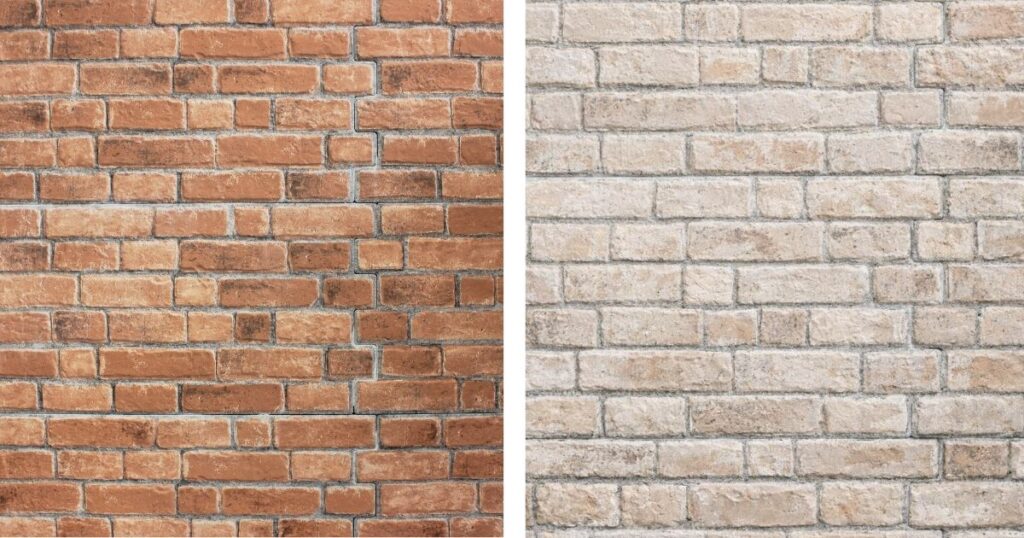
Personally, I appreciate natural brick, but not all brick contributes positively to a space. Sometimes it feels too heavy, too busy, or disconnected from the rest of the palette. That’s often when limewash enters the conversation.
What’s important to understand is that limewash does not create a solid, uniform finish. Off course there are different ways/levels of “solid-ness” to apply it. (Is that even a word? 🙂 )
It’s meant to have variation, movement, and a softer, weathered appearance. In a design world where we’re often trying to reduce visual noise, that can either be a benefit or a challenge – depending on how it’s used.
When applied with intention, limewash can absolutely elevate a space, creating something that feels more refined, grounded, and cohesive.
Here are a few things you should understand before deciding to limewash your home.
Limewash is the right direction when you want:
- A softened, time-worn look instead of a crisp, painted finish
- To reduce contrast in busy or overly warm brick
- A finish that responds to light throughout the day (not static)
- A more natural, breathable material approach vs. synthetic coatings
It works especially well on:
- Exterior brick homes that feel too harsh or dated
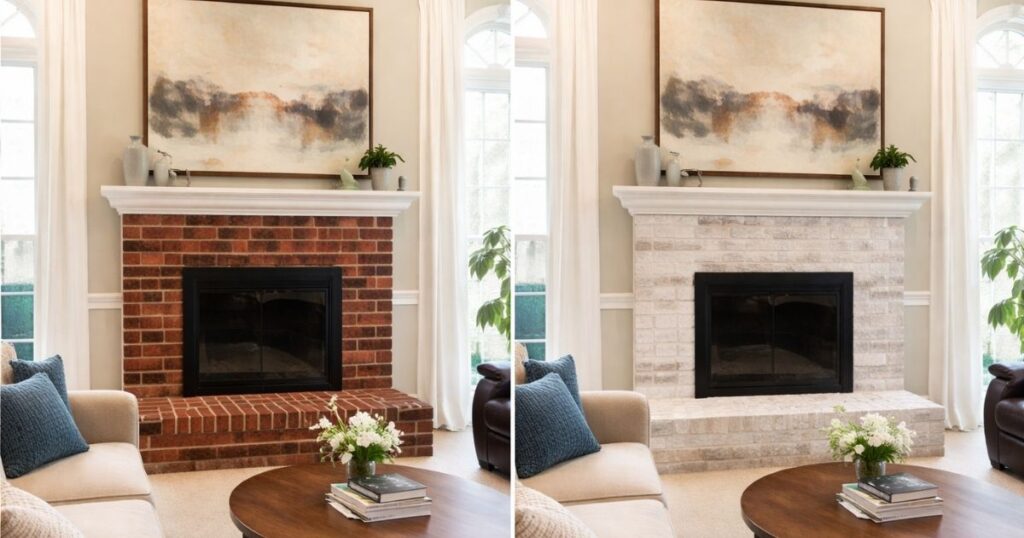
- Fireplaces that need to feel integrated into the room
- Stone surfaces where you want to unify without hiding texture
What You Need to Know Before Using It
This is where expectations matter most:
1. It only works on the right surfaces
Limewash needs unpainted, absorbent masonry (brick, stone, stucco). Limewash Brick – Timeless Beauty for Your Home If the surface is sealed or previously painted, it won’t behave correctly.
2. It is intentionally imperfect
This is not a flaw—it’s the feature.
You will see variation, brushing, and movement. If you want uniform, this is not the right finish.
3. Color is only part of the decision
The final result depends on:
- The existing brick tone underneath
- Application technique (heavy vs. diluted, even vs. broken)
- Lighting conditions (especially exterior sun exposure)
4. It ages — and that’s the point
Limewash develops character over time.
It softens, patinas, and evolves, rather than staying static like latex paint.
5. It’s breathable and mineral-based
This allows moisture to move through the wall instead of getting trapped — important for masonry longevity.
Where my clients often go wrong
- Expecting a perfectly even color
- Choosing a shade without considering the underlying brick influence
- Using it in areas where a crisper architectural finish would perform better
- Treating it like paint instead of a material transformation
The Bottom Line
Limewash is not about covering a surface — it’s about redefining how that surface interacts with light, texture, and time. Giving it a fresh but lived in, natural look.
When used intentionally, it can make a home feel grounded, quiet, and architecturally resolved.
When used without strategy, it can feel inconsistent or unfinished.
Ready to take the next step?
You can book an appointment with me for personalized support or schedule a discovery call if you’d like to explore how I can help.
Enjoy this blog?