Many homeowners believe the only way to make a wall more interesting is to add artwork, wallpaper, or architectural paneling. But sometimes the wall doesn’t need decoration at all. What it really needs is depth.
This is where finishes like plaster and limewash come into play.
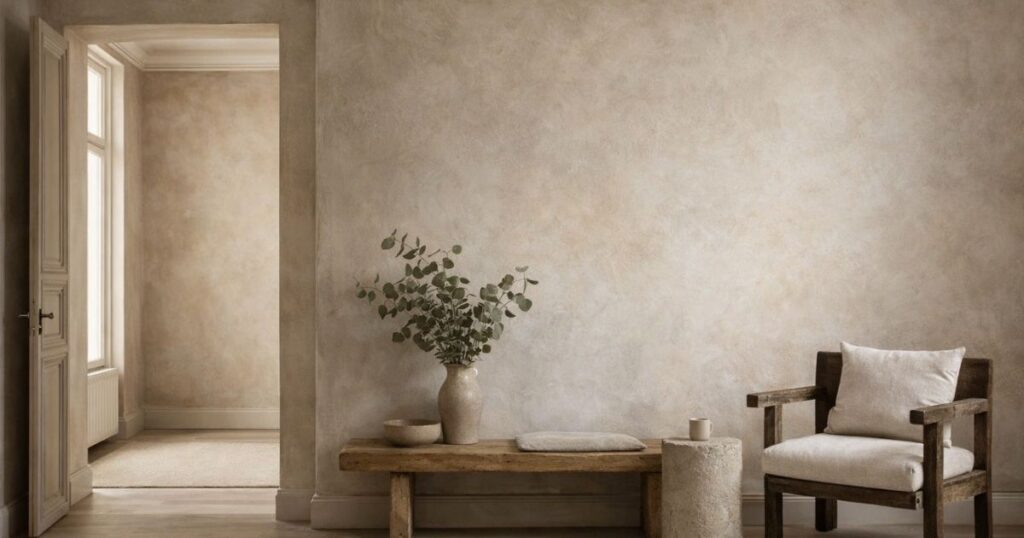
Unlike traditional paint, which creates a flat and uniform surface, plaster and limewash introduce subtle variation, soft movement, and natural texture. The result is a wall that feels alive — one that quietly reflects light and shadow throughout the day without demanding attention.
When used thoughtfully, these finishes can transform a room from something that feels ordinary into something that feels layered, calm, and intentionally designed.
Why Flat Paint Sometimes Falls Short
Flat painted walls certainly have their place. They create a clean background and allow furniture and artwork to stand out. However, in many modern homes — especially those with open floor plans or large wall expanses — flat paint can leave a space feeling unfinished.
Large or tall walls often need a sense of depth or material presence. Without it, a room can feel visually flat, even if the color itself is beautiful.
Plaster and limewash solve this problem in a very quiet way.
Instead of adding pattern or graphic contrast, these finishes create movement within the surface itself. The wall becomes part of the architecture rather than just a backdrop.
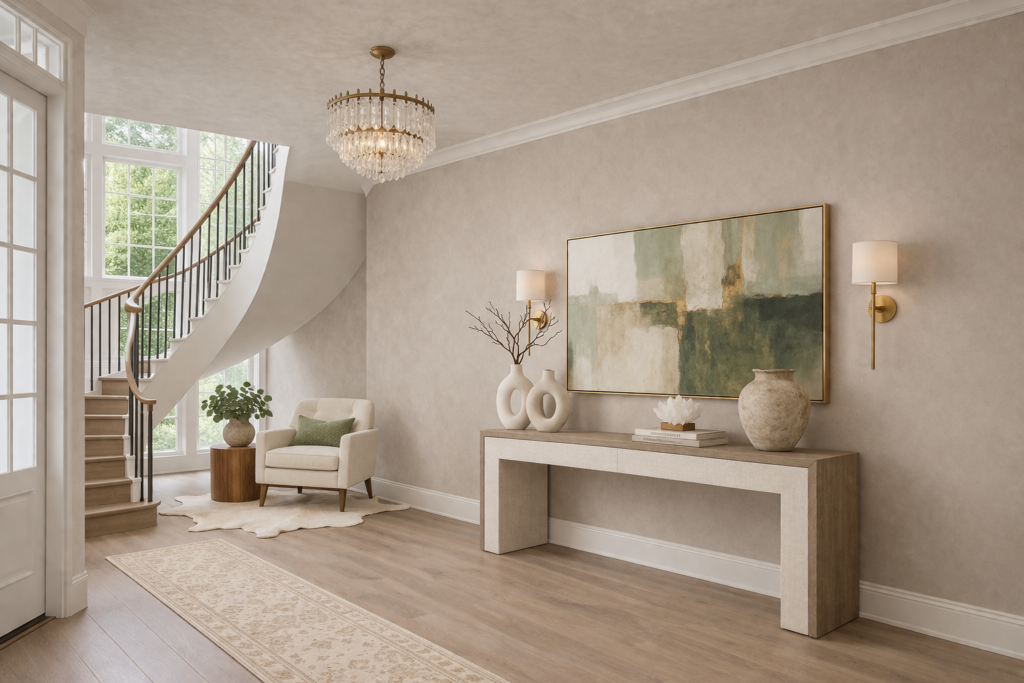
Understanding the Difference: Limewash vs. Plaster
Although they are often grouped together, limewash and plaster are slightly different materials.
Limewash
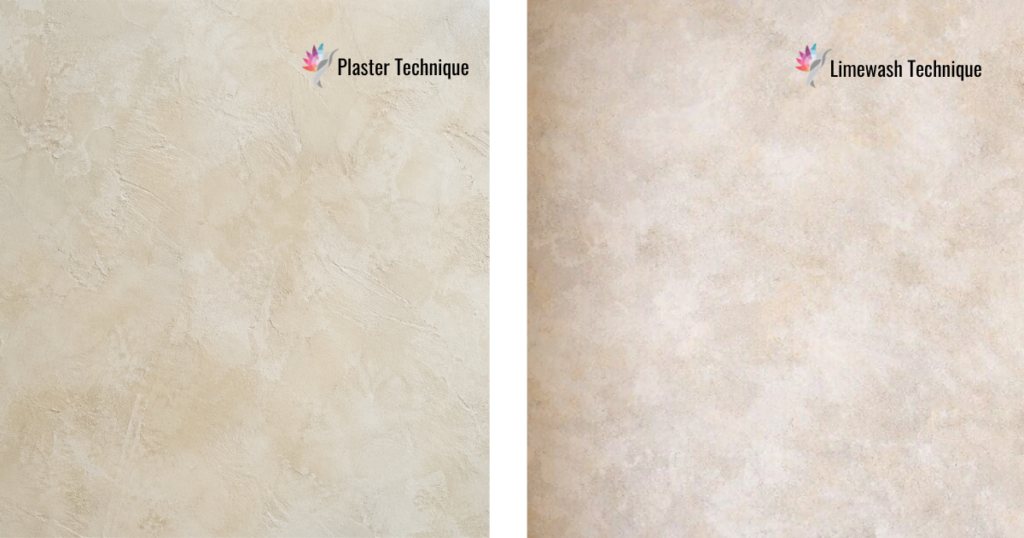
Limewash is a mineral-based paint made from crushed limestone and natural pigments. When applied to a wall, it creates a soft, chalky finish with gentle tonal variation.
The beauty of limewash lies in its cloud-like movement. As light shifts throughout the day, the surface subtly changes in appearance. No two walls look exactly the same, which gives the room a handcrafted quality.
Plaster Finishes
Decorative plasters — such as Roman clay or Venetian plaster — are thicker materials applied with a trowel. They produce a slightly more textured, dimensional surface and can range from matte to softly polished.
Plaster finishes tend to feel more architectural, almost like the wall has been sculpted rather than painted.
Both options provide depth without visual noise, which is why they are frequently used in sophisticated interiors.
Where These Finishes Work Best
Because plaster and limewash rely on subtle movement rather than pattern, they work best in areas where you want the wall itself to carry visual weight.
Some of the most successful applications include:
Fireplace Walls
A textured finish can give a fireplace wall presence without competing with the mantel or surrounding materials.
Dining Rooms
The gentle movement adds elegance while still allowing furniture and lighting to remain the focal point.
Primary Bedrooms
Soft texture helps create a calming atmosphere and adds richness without making the space feel busy.
Entry Walls
Large entry walls often feel empty with simple paint. A plaster or limewash finish immediately adds depth upon entering the home.
Living Rooms with Large Walls
Instead of forcing oversized artwork onto a wall, texture can create interest naturally.
Why These Finishes Feel Timeless
One reason plaster and limewash have become increasingly popular is that they don’t feel trendy.
These finishes have been used in architecture for centuries. Mediterranean homes, historic European buildings, and even early American structures often relied on mineral-based coatings and plaster finishes long before modern paint existed.
That history gives these walls a sense of authenticity.
Rather than looking like a design decision that will date quickly, plaster and limewash tend to feel organic and enduring, which is why they often appear in homes designed to age gracefully.
The 5 Most Common Products Designers Use
Romabio – Classico Limewash
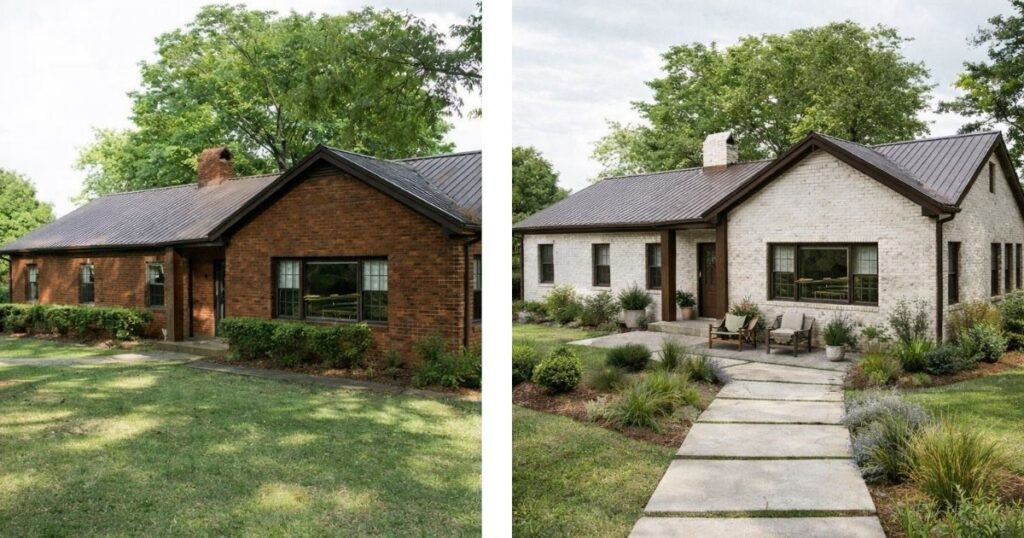
Authentic slaked-lime paint made from limestone that creates a soft, weathered limewash finish on masonry surfaces like brick and stone.
https://romabio.com/classico-limewash/
Portola Paints – Lime Wash
A traditional mineral limewash that produces a natural chalky patina and subtle tonal variation as it dries.
https://www.portolapaints.com/products/lime-wash
Portola Paints – Roman Clay
A decorative clay-based plaster applied with a trowel that creates a soft marble-like texture with very low sheen.
https://www.portolapaints.com/products/roman-clay
Bauwerk Colour – Limewash Paint
A breathable mineral paint made from natural lime that can be used on masonry, plaster, drywall, and concrete surfaces.
https://www.bauwerkcolour.com/en/limewash-paint
Meoded – Lime Wash & Venetian Plaster Finishes
Natural mineral-based coatings designed to create mottled limewash effects and traditional European plaster finishes.
https://meodedpaint.com/
Most of these products are mineral-based coatings made from slaked limestone, which allows the wall to remain breathable while creating subtle variation in color and texture.
Unlike standard paint, limewash and plaster finishes develop natural depth and patina over time, which is part of the aesthetic designers seek when choosing these materials.
A Designer Insight: Texture Should Feel Intentional
One of the biggest mistakes I see is treating textured wall finishes as a decorative afterthought.
Texture should always be used for a reason.
Perhaps the wall is too large and feels empty. Maybe the space needs warmth or architectural presence. Or maybe the room simply lacks material variation.
When plaster or limewash is applied thoughtfully, it doesn’t scream for attention. Instead, it quietly improves the way the entire room feels.
That subtle shift is often what separates a space that looks decorated from one that truly feels designed.
Sometimes the most impactful design decisions are the quietest ones. Plaster and limewash finishes introduce movement, depth, and warmth without adding visual clutter. They allow the architecture of the room to breathe while still giving the wall a sense of purpose.
In many homes, this kind of subtle texture is exactly what transforms a flat wall into something far more interesting — and far more timeless.
If you’re considering wall treatments but aren’t sure what will work best in your home, a professional color consultation can help bring clarity.
Together we evaluate lighting, architectural features, and existing materials to create a plan that feels cohesive and intentional. The goal isn’t just choosing colors — it’s helping your home feel balanced, calm, and beautifully designed.
Ready to give your walls more depth?
Plaster and limewash are beautiful, but they are also a commitment. The way these mineral finishes react to your home’s unique lighting and existing materials is what makes them so special—and so tricky to get right. Our Interior Fixed Elements Consultation provides the expert clarity you need to choose the right product and tone with total confidence.
For more in detail info, make sure you read this blogpost from Papermoon Painting as well
Check My Interior Fixed Elements Consultation Here!
Ready to move beyond basic paint choices?
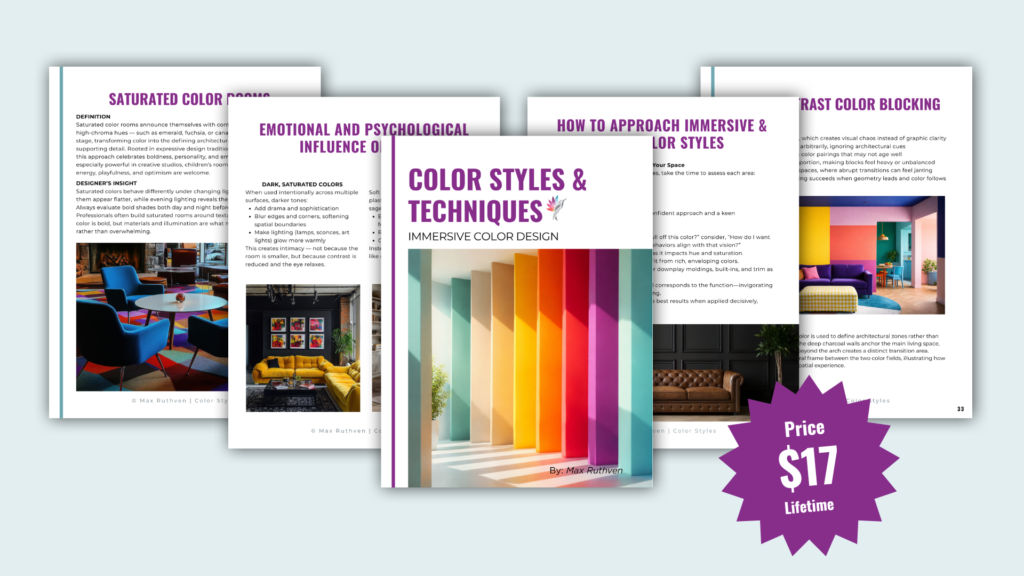
Color is more than a decorative detail—it’s an architectural tool that shapes how you experience your home. If you are ready to stop playing it safe and start designing with intention, our new eBook, “Immersive and Bold Color Techniques,” is your professional roadmap. Learn how to master color drenching, color capping, and high-contrast blocking to transform your space into a cohesive, high-end sanctuary.
Download Your Guide to Immersive Color Design Here
Let’s continue learning!
If you’re considering how to elevate your walls beyond paint, these guides will help you understand how each treatment functions within a space — not just how it looks:
Wallpaper as an Architectural Tool (Not a Trend) → Link Here
Decorative Wood Patterns used as an Architectural Tool → Link Here
Vertical Slats vs. Fluted Panels: What Actually Works (and What Doesn’t) → Link Here
Tile & Stone as Architectural Wall Surfaces → Link Here
Enjoy this blog?