When a Wall Becomes Part of the Architecture
For many years, tile and stone were mostly confined to floors, showers, and kitchen backsplashes. Today, designers are using these materials very differently. Instead of acting as decoration, they are becoming architectural surfaces that define a room.
A stone or tile wall introduces depth, permanence, and texture — something paint alone cannot achieve. When used intentionally, it anchors a space and creates a visual focal point without relying on excessive décor.
Below are several ways this idea is showing up in modern homes.
1. Fireplace Walls
The fireplace is one of the most natural places to introduce an architectural surface. Rather than a traditional mantle and surround, many modern homes now feature full-height stone or slab installations.
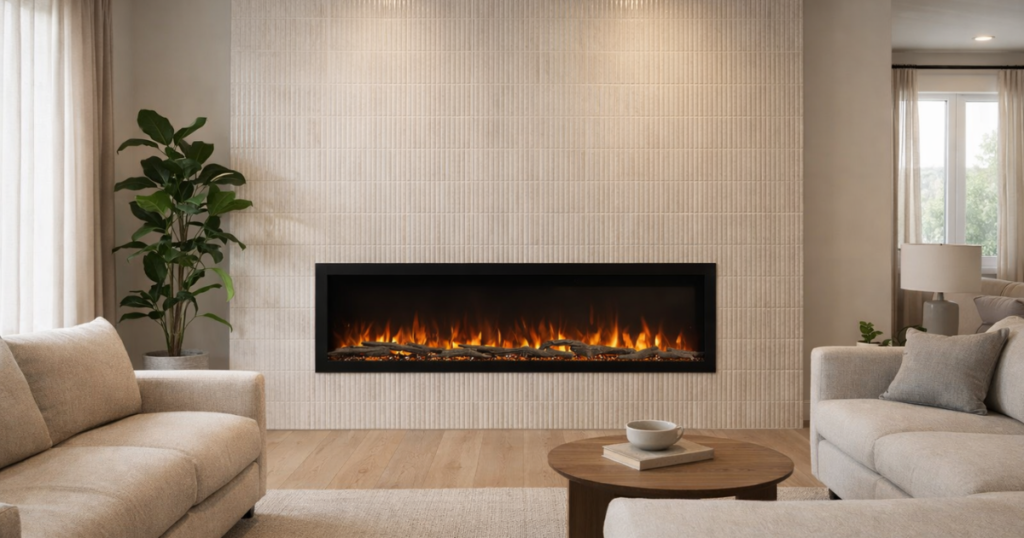
Large-format porcelain slabs, limestone panels, fluted tiles like the one in the image below or marble create a quiet but powerful presence in the room. Extending the material from floor to ceiling emphasizes the vertical height of the space and turns the fireplace into a sculptural element rather than simply a functional feature.
Design approaches that feel current:
- Book matched marble slabs
- Warm limestone panels
- Large porcelain slabs with subtle veining
- Stone or tile running continuously from hearth to ceiling
Below is a fireplace where a Fluted Tile was used as an accent tile. Modern and streamlined
Modern Kitchen Applications
2. The Modern Range Wall
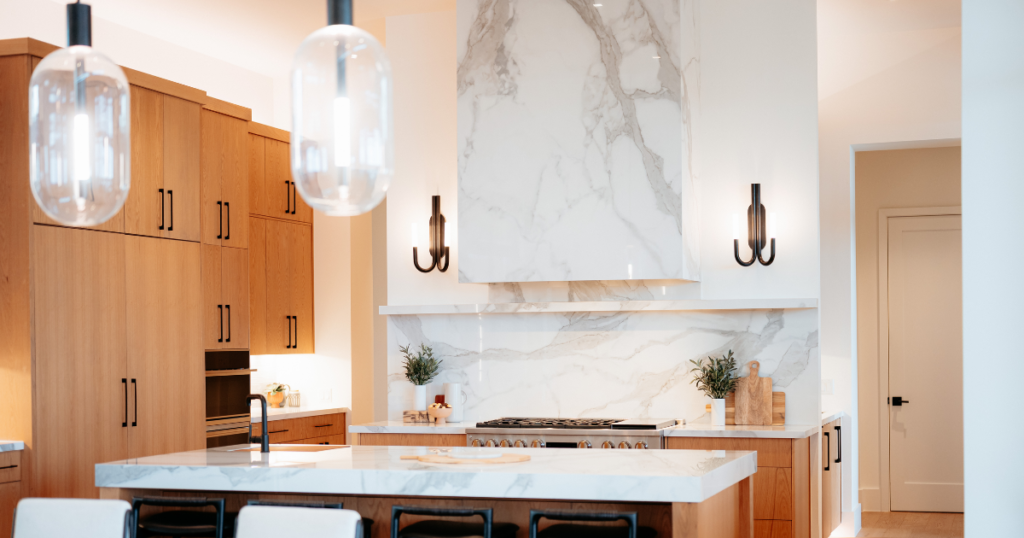
In contemporary kitchens, the backsplash behind the range is increasingly being treated as a vertical architectural surface rather than a small, tiled area.
Instead of stopping at the upper cabinets, the material often runs full height from countertop to ceiling, creating a clean, uninterrupted surface.
Examples include:
- Quartzite or marble slabs behind the range
- Porcelain slab backsplashes that mimic natural stone
- Minimal grout large-format tiles arranged vertically
- Continuous material that visually connects the counter to the wall
This approach simplifies the kitchen visually while adding a refined, high-end presence.
Unexpected Architectural Moments
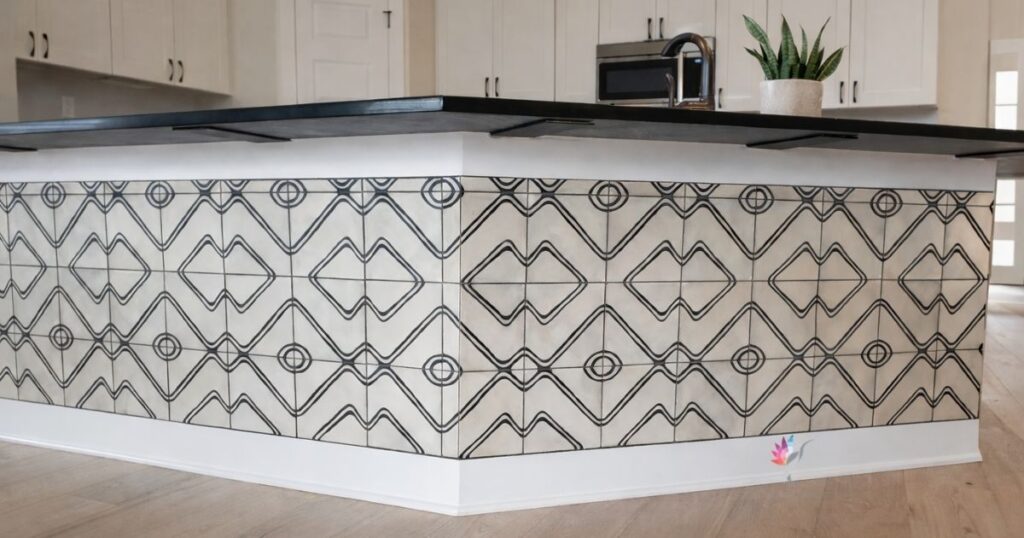
3. The Back of a Kitchen Island
One of the most overlooked opportunities is the back of the kitchen island, the side facing the bar stools or living area.
Cladding this vertical surface in stone or tile can transform the island into a true architectural centerpiece. It also introduces texture exactly where people are visually focused while seated.
Ideas include:
- Fluted stone panels
- Thin stacked stone or limestone tiles
- Porcelain panels that match the countertop
- Handmade tiles for subtle texture
Below you will see how these tiles were applied. This was a very interesting home, eclectic, global décor and these tiles were a perfect fit to complement the rest of the decor and furniture style in the room.
4. Entryways and Transitional Spaces
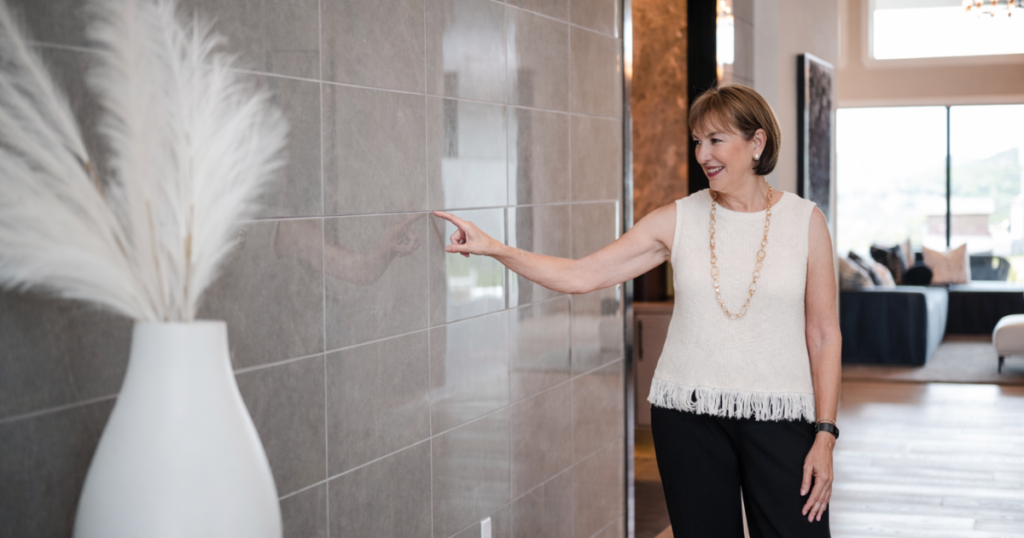
Hallways, stair landings, and entry walls are ideal locations for architectural materials because they naturally act as visual transitions between spaces.
A single stone or tile wall in these areas can establish the tone of the home the moment someone enters.
Examples:
- Limestone walls in entry vestibules
- Vertical porcelain slabs in hallways
- Handmade tile walls paired with soft plaster surfaces
- Subtle stone textures behind floating staircases
In this Travisso Model Home in Leander, they used a large format glossy tile in the entrance, stacked and all the way to the ceiling
Why This Approach Works
Using tile and stone vertically is part of a broader movement toward material-driven design. Instead of layering many decorative elements, the architecture itself carries the visual weight.
When done well, these surfaces offer:
• Longevity – natural materials age beautifully
• Texture and depth – light interacts with the surface
• Visual calm – fewer materials used more intentionally
• Architectural presence – the room feels designed, not decorated In modern homes, the most compelling interiors often rely on a few strong materials used thoughtfully. Tile and stone, when treated as architectural elements rather than accessories, can elevate a space in a way that feels both timeless and current.
Heading to the design center for your new build or remodel?
Selecting large-format slabs or architectural tile is a major investment that defines your home for years to come. Our Interior Fixed Elements service is designed to take the guesswork out of these permanent decisions. We’ll meet you at the design center or onsite to ensure your stone, tile, and cabinetry align perfectly before the first piece is installed.
Check My Interior Fixed Elements Consultation Here!
Ready to move beyond basic paint choices?
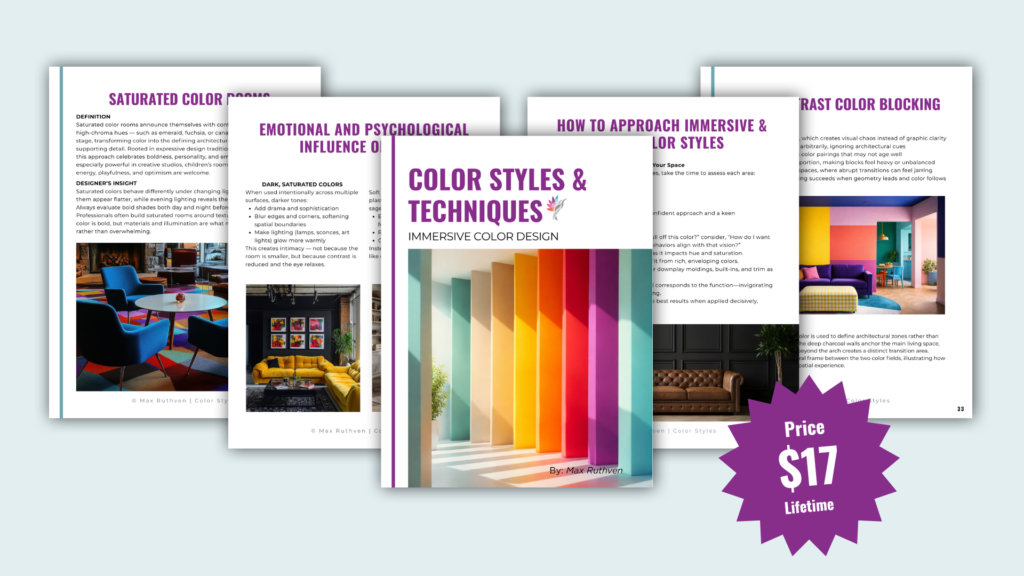
Color is more than a decorative detail—it’s an architectural tool that shapes how you experience your home. If you are ready to stop playing it safe and start designing with intention, our new eBook, “Immersive and Bold Color Techniques,” is your professional roadmap. Learn how to master color drenching, color capping, and high-contrast blocking to transform your space into a cohesive, high-end sanctuary.
Download Your Guide to Immersive Color Design Here
Let’s continue learning!
If you’re considering how to elevate your walls beyond paint, these guides will help you understand how each treatment functions within a space — not just how it looks:
Wallpaper as an Architectural Tool (Not a Trend) → Link Here
Decorative Wood Patterns used as an Architectural Tool → Link Here
Vertical Slats vs. Fluted Panels: What Actually Works (and What Doesn’t) → Link Here
Limewash & Plaster Walls: Softness, Movement, and Depth → Link Here
Enjoy this blog?
For ongoing insights and real project examples, you can also follow along on Instagram and Facebook for more.