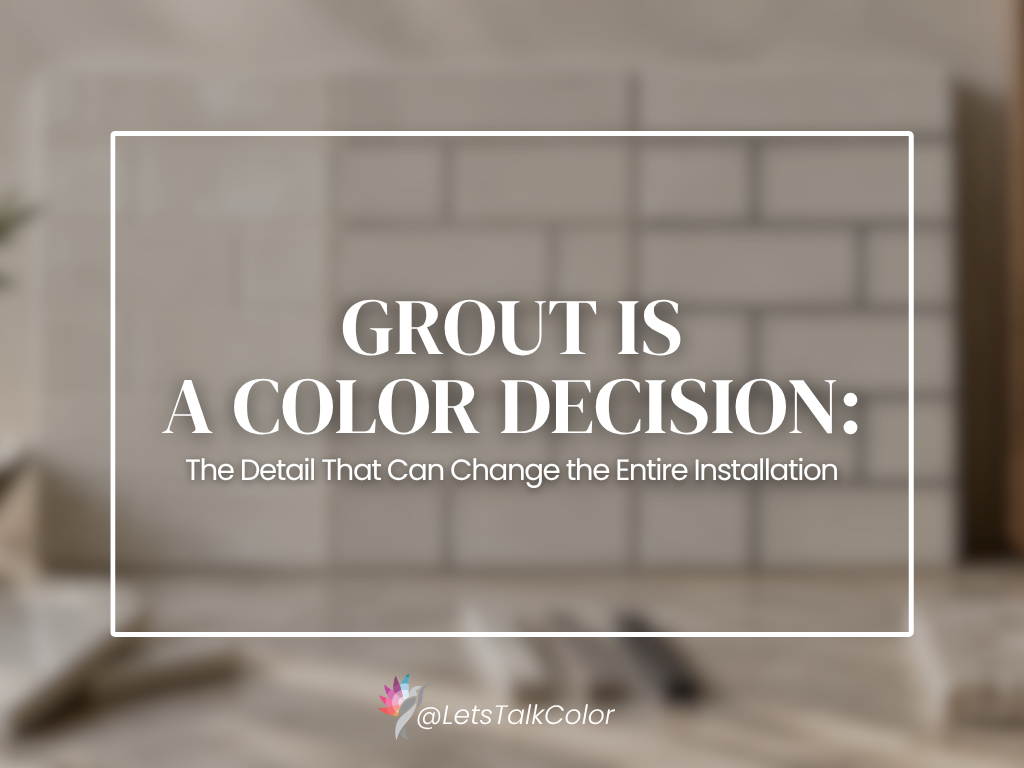
Grout is often selected at the end of a tile project, almost as if it were only a technical detail.
It is not.
Grout becomes part of the finished color composition. Depending on the tile size, layout, and joint width, it can have a surprisingly strong visual presence.
The tile may be beautiful, but the grout influences how that tile is read.
Grout Can Blend or Create Contrast
One of the first decisions is whether the grout should blend with the tile or stand apart from it.
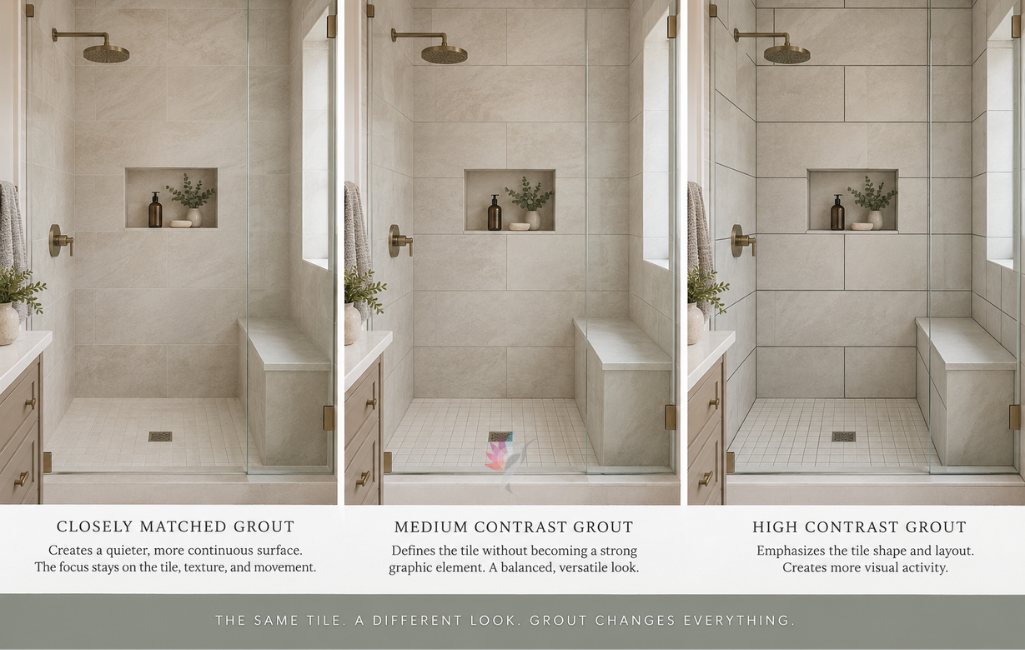
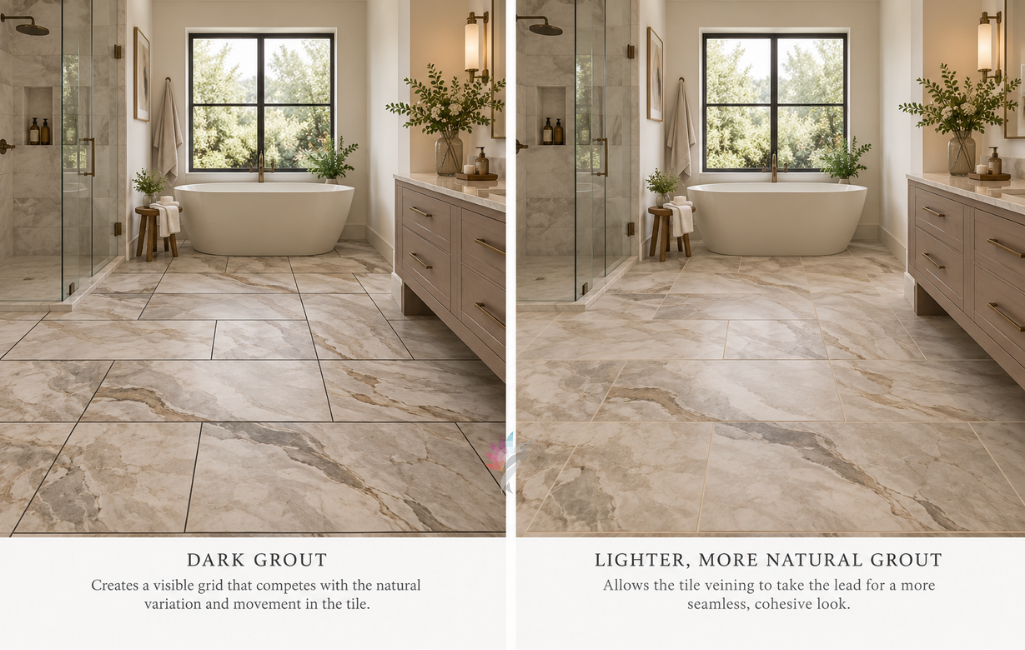
A closely related grout creates a quieter, more continuous surface. It allows the color, texture, and movement of the tile to remain the focus.
A contrasting grout emphasizes every joint. The shape of the tile becomes more visible, and the layout becomes a stronger part of the design.
Neither approach is automatically right.
The question is: What do you want the eye to notice?
With a handmade or dimensional tile, a quieter grout may allow the texture and variation to lead. With a simple geometric tile, more contrast may intentionally emphasize the pattern.
But remember: the greater the contrast, the more visual activity you introduce.
The Amount of Contrast Matters
Grout contrast is not limited to white versus black.
Even a relatively small difference in lightness or depth can change the appearance of the installation.
A slightly lighter grout may define the tile gently. A slightly darker grout can add definition without creating a strong graphic effect.
Often, the best relationship is somewhere between an exact match and dramatic contrast.
The goal is not necessarily to make the grout disappear. It is to decide how much attention it should receive.
Grout Has Color, Too
Grout colors are often described broadly as white, ivory, beige, gray, taupe, brown, or charcoal.
But those names do not tell the whole story.
A light grout may carry a creamy, yellow, pink, green, blue, violet, taupe etc. influence. Those subtle differences can become much more noticeable once the grout is repeated across an entire installation.
Place a warmer grout beside a cooler white tile and the tile may suddenly appear cooler. Put a cooler gray beside a warm tile and the warmth of the tile may become more pronounced.
This is an important color principle:
Colors are not perceived in isolation. They are influenced by the colors surrounding them.
Grout is no exception.
Do Not Match Only the Most Obvious Color
Patterned and natural-looking tiles often contain several colors.
Instead of automatically matching the most obvious background color, look at the tile as a whole.
The grout might relate to the dominant color, but it could also connect to a quieter secondary color or help reduce contrast between several variations within the tile.
Sometimes that quieter relationship creates a much more balanced installation than an exact match to the most obvious shade.
Tile Size Changes the Influence of Grout
The amount of grout you see matters.
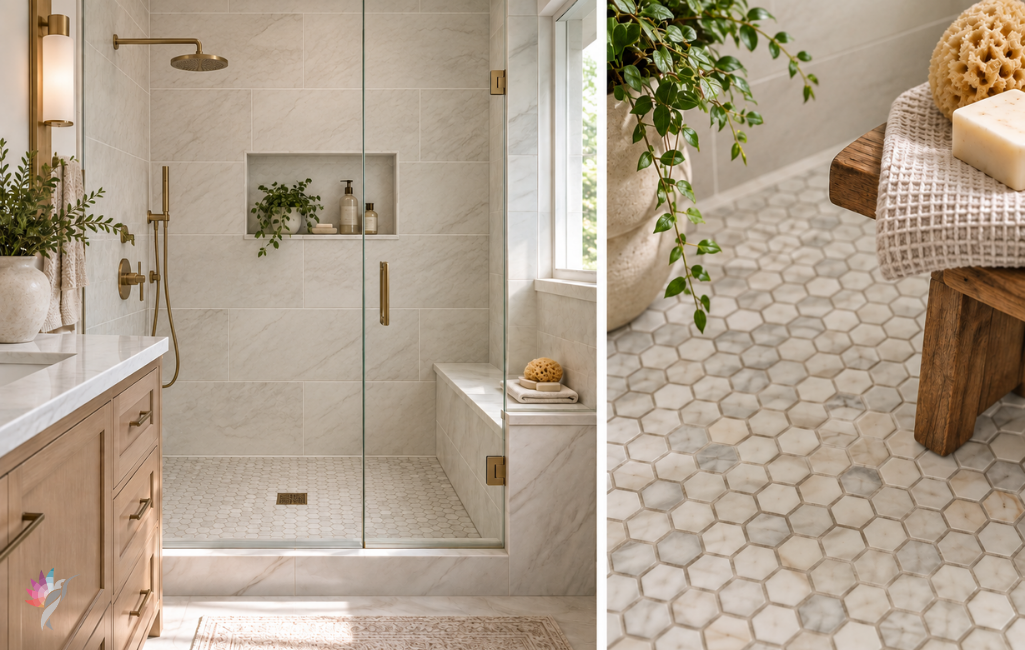
Small tiles create many grout lines. Large-format tiles create fewer.
That means grout can have a particularly strong influence with mosaics, penny tile, hexagons, subway tile, basketweave, and other repeated patterns.
With a small tile and contrasting grout, the grout itself can become one of the dominant colors in the installation.
With large-format tile, it may play a quieter role, but it still affects whether the finished surface feels continuous or segmented.
The more grout lines you see, the more important the grout color becomes.
Layout and Grout Work Together
Grout also makes the tile layout more visible.
In a straight stack, it emphasizes the vertical and horizontal lines. In a running bond, it reveals the offset. In a herringbone installation, it emphasizes the movement and geometry of the pattern.
That can be beautiful when the layout is meant to be a feature.
But if the tile already contains strong variation, veining, texture, or movement, highly contrasting grout may introduce another layer of visual activity.
Consider the tile color, pattern, scale, surface movement, and grout together rather than making each decision separately.
Different Tiles May Need Different Grout Decisions
Not every tiled surface in a room has to use the same grout color.
A small mosaic shower floor and a large-format shower wall create very different visual relationships. A decorative backsplash may intentionally emphasize pattern, while a large tiled wall may look better as a quieter, more continuous surface.
Consistency matters, but so does context.
The grout should support the particular tile and the role that surface plays in the room.
Test the Relationship
A small grout stick held beside one loose tile tells you only so much.
Whenever possible, look at several pieces of tile together with the proposed grout. Consider the actual joint width and the amount of grout that will be visible.
Then step back.
Up close, you notice subtle color differences. From farther away, you see the overall pattern, contrast, and visual texture.
Both views matter.
Ask What the Grout Should Do
Before choosing the grout, ask:
- Should it blend with the tile or define it?
- Do I want to emphasize the tile shape or its surface?
- Does the installation already contain a lot of pattern or movement?
- Is there a quieter color within the tile worth connecting to?
- How much contrast do I want to introduce?
- How does the grout relate to the other materials in the room?
The grout should have a clear role.
Final Thought
Grout is not merely the material between the tiles.
It affects how we perceive the tile’s color, pattern, scale, and movement. And because that color is repeated across the entire installation, even a subtle difference can have a significant visual effect.
Choose the grout as part of the tile decision—not as an afterthought.
A fixed-elements consultation considers tile, grout, countertops, cabinetry, flooring, paint, and surrounding materials together. The goal is to understand how those colors and materials relate before individual selections become permanent.
Ready to take the next step?
You can book an appointment with me for personalized support or schedule a discovery call if you’d like to explore how I can help.
Enjoy this blog?