Why Paint Shouldn’t Be Your First Design Decision in a New Home
Many of my clients call me shortly after purchasing a house, while it is still vacant. They are excited, ready to make it their own, and eager to have the painting completed before the furniture arrives.
From a practical standpoint, that makes perfect sense.
Painting an empty house is easier, faster, and often less expensive. There is no furniture to move, fewer belongings to protect, and far less disruption than painting after you’ve moved in.
The challenge is that although paint may be one of the first things completed, it should not be the first design decision made.
Why an Empty House Can Be Deceptive
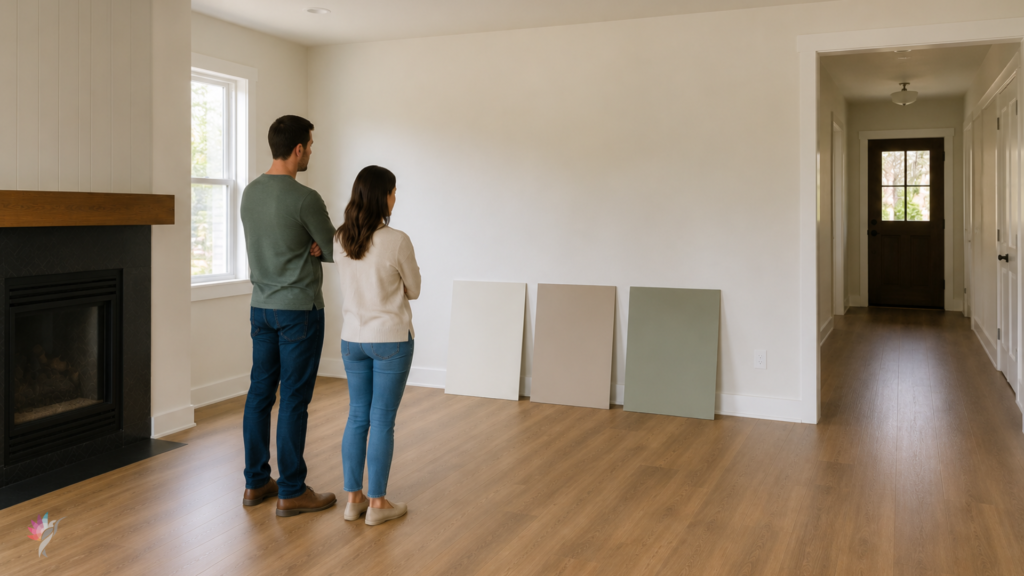
When you walk into an empty room, the walls often become the most noticeable surface. That naturally makes paint color feel like the obvious place to begin.
But a vacant room does not yet show you how the finished space will function or feel.
The home’s fixed elements may already be in place, but the softer layers are still missing. Flooring, cabinetry, countertops, tile, stone, and other architectural features establish the foundation of the space, while rugs, upholstered furniture, window treatments, artwork, lighting, and accessories have yet to complete the picture.
Because the room is visually quiet, many paint colors may appear to work.
That can create a false sense of certainty.
Once the furniture arrives, the walls are no longer viewed in isolation. The paint must relate to the wood tones, fabrics, metals, rugs, artwork, and all of the other colors introduced into the space.
A neutral that looked soft and balanced in an empty house may suddenly appear grayer, more yellow, pinker, or flatter beside the furnishings.
The paint did not change. Its surroundings did.
You Do Not Need Every Detail Finalized
This does not mean you need to choose every chair, pillow, and piece of artwork before painting.
You do, however, need a general direction.
Before selecting paint, consider:
- Which existing furniture will move into the house?
- Are the wood tones light, medium, or dark? Warm or cool?
- Do you already own rugs or artwork that will influence the palette?
- Will the furnishings feel organic and relaxed, clean and contemporary, traditional, colorful, or more restrained?
- Do you prefer quiet rooms with subtle transitions or stronger contrast and definition?
These decisions provide enough context to guide the paint colors without requiring every decorating decision to be finalized first.
Begin With What Is Staying
When the fixed elements are remaining, they should become the foundation of your color plan.
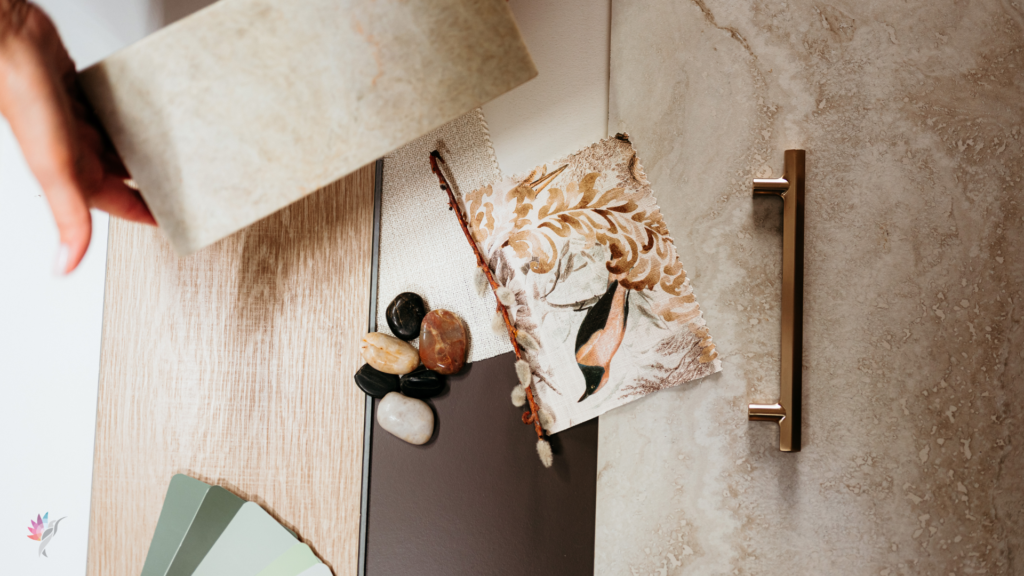
Look carefully at the existing materials and how they relate to one another before introducing another color into the space. Some homes already contain several warm finishes, while others combine warm and cool materials that need to feel intentional rather than disconnected.
The wall color should help create harmony between those existing finishes instead of competing with them.
The goal is not simply to choose a color that looks attractive on a paint sample. It is to choose one that strengthens the relationships between the materials already present in the home.
Look at the Entire House, Not Just One Room
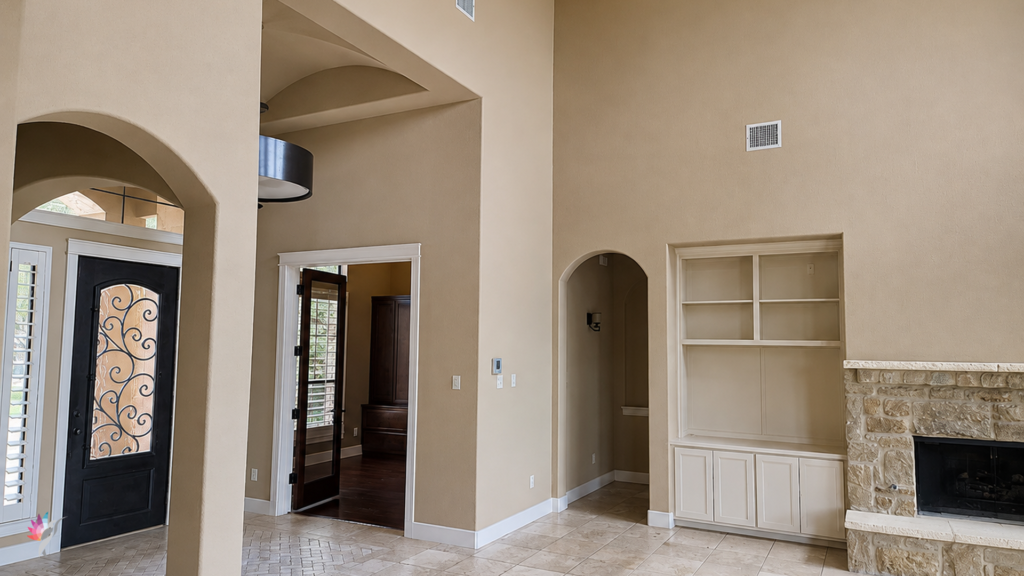
A vacant house also gives you an excellent opportunity to study how the rooms connect.
Walk through the home and pay attention to the sightlines.
Ask yourself:
- Which rooms are visible from the entry?
- Which spaces open directly into one another?
- Where does one wall color naturally stop?
- Are there long hallways or shared ceilings connecting several areas?
- Does the home need one main neutral, or can certain rooms support their own color?
Choosing each room independently can leave a house feeling fragmented. A thoughtful color plan allows the rooms to feel connected without making every space look exactly the same.
The Best Approach Before Move-In
Painting before moving in can absolutely be the right decision.
The better approach is to establish the overall direction of the home first and then choose paint colors that support it.
Before the painter begins, you should have a reasonable understanding of:
- which existing finishes will remain;
- which furniture and rugs you plan to bring;
- the overall style and feeling you want to create;
- how the rooms visually connect;
- where you want subtlety and where you want contrast; and
- what each paint color needs to accomplish.
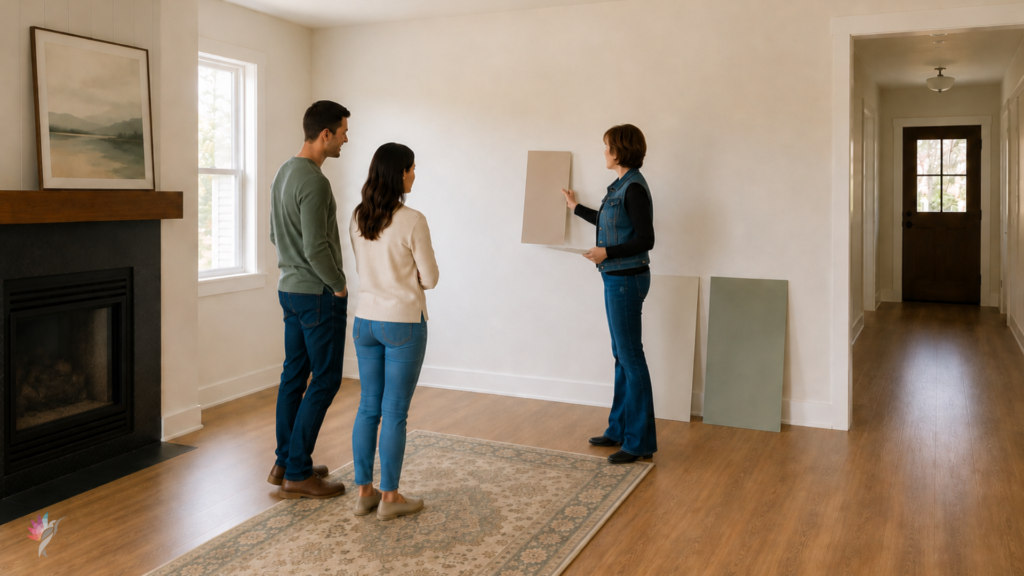
Once that direction is clear, test your leading paint options in the actual house. Observe them alongside the existing materials and at different times of day.
Do not rely solely on a small paint chip, a photograph, or how the color appeared in someone else’s home.
Ask a Better First Question
Instead of asking:
“What color do I want on the walls?”
Ask:
“What does this paint need to work with, and what job aka. feeling or atmosphere should it perform in this home?”
That question changes the entire process.
Paint may be one of the first design elements completed in a vacant house, but it should never be the first one considered.
Closing Thoughts
A whole-home color consultation can help you make these decisions before the painters arrive—while the house is still empty and the process is easier to manage.
The goal is not simply to choose attractive paint colors. It is to develop a thoughtful color plan that works with the home’s existing materials, supports the way you live, and creates a cohesive foundation for everything that comes next.
Ready to take the next step?
You can book an appointment with me for personalized support or schedule a discovery call if you’d like to explore how I can help.
Enjoy this blog?