In The Color Conversation We Were Never Taught to Have, we explored how choosing paint isn’t really about color—it’s about translating emotion into atmosphere. This week, we’re continuing that conversation by decoding the words that often lead homeowners astray.
Because when someone says, “I just want something neutral,” they’re rarely talking about paint. They’re talking about how they want their home to feel.
Why Words Like “Neutral,” “Warm,” and “Timeless” Can Lead You to the Wrong Paint Color
“I just want something neutral.”
If I had a dollar for every time I heard that during a color consultation, I could probably retire.
The interesting thing is that neutral doesn’t actually tell me very much—neither do warm, bright, timeless, or clean. They’re some of the most common words homeowners use – because it’s all over the internet -and also the most confusing.
The problem isn’t that people are using the wrong words. It’s that we’ve never been taught the language of color.
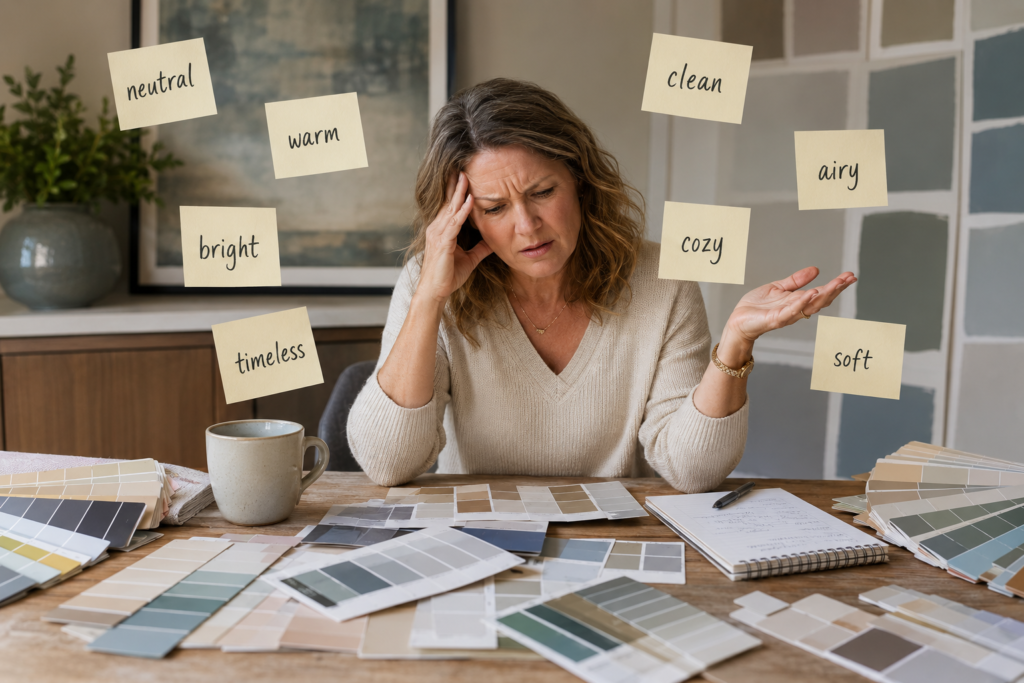
We Think We’re Talking About Paint—but We’re Usually Talking About Feelings
When someone says:
- “I want something timeless.”
- “I don’t want it to look yellow.”
- “I want it light and airy.”
- “I love warm colors.”
- “I need a neutral.”
They’re rarely describing the actual paint color. They’re describing how they want the room to feel.
That’s a completely different conversation—and it’s where most color decisions go sideways.
What Those Words Actually Mean
Neutral
Most people think neutral means beige, gray, greige, or white. In reality, almost every neutral contains an underlying color.
Some lean green. Some lean pink. Some lean violet. Some lean yellow. Some lean blue.
Neutrals are simply colors with lower chroma—they’re muted, not colorless. That’s why one “neutral” can feel calm and balanced, while another feels unexpectedly cold or muddy.
Warm
Warm doesn’t automatically mean yellow. Some warm colors are creamy. Others are peachy. Some feel earthy. Others have a pinkish hue.
Two paint colors can both be considered warm while looking completely different once they’re on your walls because colors reveal their true character in context. The light, surrounding finishes, and neighboring colors all influence how that warmth is perceived. Warmth is emotional—it’s about how a space welcomes you, not just what undertone it carries.
Bright
This word creates confusion almost every time. Does bright mean:
- More natural light?
- A lighter paint color?
- Higher contrast?
- Purer whites?
- More saturated color?
- New LED Light bulbs?
Every homeowner means something different. That’s why “bright” can lead to a result that feels harsh instead of airy when you attempt it yourself.
Timeless
This may be the most misunderstood word of all. Timeless isn’t a paint color—it’s a relationship.
It’s the result of choosing colors that respect your home’s architecture, fixed finishes, lighting, and surroundings rather than chasing a trend. A color becomes timeless because it belongs in the space — not because it’s popular.
Why Online Paint Advice Often Fails
Search “best warm white paint,” and you’ll instantly get dozens of recommendations: Greek Villa. Swiss Coffee. White Dove. Shoji White.
They’re all beautiful colors, but none of them are automatically right for your home.
Your fixed elements and even the direction your home faces all change how those colors behave. Paint doesn’t exist by itself. It always lives in context.
The Better Conversation
Instead of asking: “What’s the best neutral?”
I listen very carefully at what my client is really saying, and these questions usually follows:
- What materials are staying?
- What time of day do you spend in this room?
- Which direction do your windows face?
- What colors make you feel relaxed?
- What don’t you like about your current room?
- Is there a room in your home whose feeling you’d like to repeat?
Those answers tell me far more than the word neutral ever could.

Color Is a Language
The biggest part of my job isn’t choosing paint—it’s translating. It’s understanding. It’s listening.
When a client says, “I don’t want gray,” they might actually mean, “I don’t want my house to feel cold.” When they say, “I want a warm white,” they might mean, “I want my home to feel welcoming.”
Those aren’t color choices. They’re emotional goals.
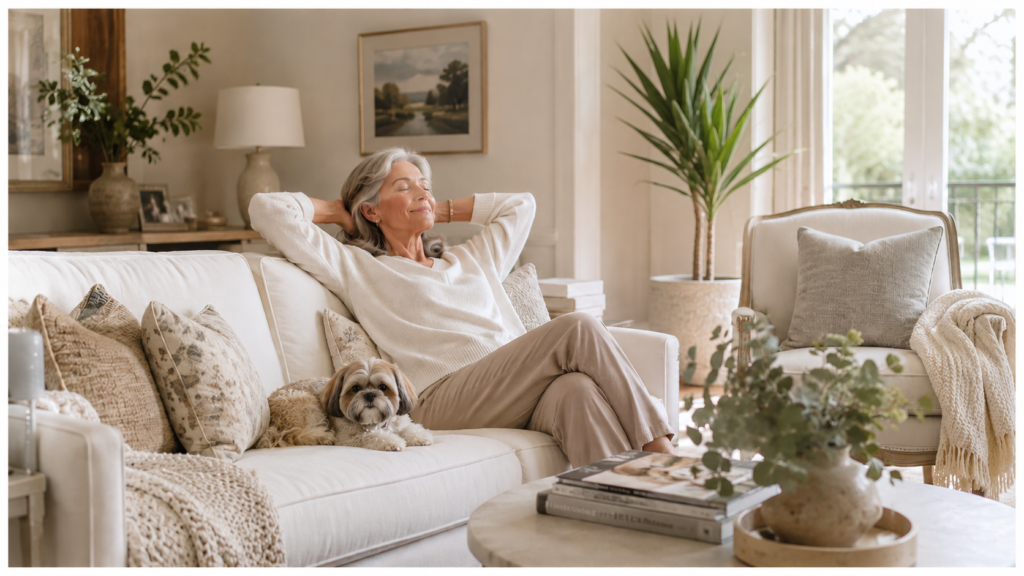
Once we understand the feeling behind the words, choosing the right color becomes much easier.
The next time you’re choosing paint, don’t worry about finding the perfect “neutral.” Think instead about how you want your home to feel.
Because the best color consultations don’t begin with paint chips— they begin with understanding the language of color.
Ready to take the next step?
You can book an appointment with me for personalized support or schedule a discovery call if you’d like to explore how I can help.
Enjoy this blog?